


Introduction: The Foundation of Digital Fabrication
In the realm of additive manufacturing, particularly within the domain of resin 3D printing, the humble STL file stands as a cornerstone. It serves as the ubiquitous conduit translating complex three-dimensional digital designs into instructions for physical creation. For enthusiasts, hobbyists, and professionals alike, a profound understanding of STL files and their optimal preparation is paramount to unlocking the full potential of resin printers. This article delves into the intricacies of STL files, their critical role in achieving high-fidelity prints with premium resin, and how to navigate the digital landscape from design to a tangible figurine.
Understanding the STL File Format
The term 'STL' is an acronym for 'stereolithography', the first 3D printing technology invented by Charles Hull in the 1980s. At its core, an STL file is a standard tessellation language that describes the surface geometry of a 3D object using a collection of interconnected triangles. These triangles form a mesh, approximating the original model's shape. Each triangle is defined by its vertices and a normal vector, indicating its orientation. This simple yet effective method allows for efficient data representation, making STL a universal format across various 3D modeling software and slicing applications.
While STL is widely adopted, its inherent limitation lies in its inability to store color or texture information directly. It focuses solely on geometry, presenting a 'shell' of the object. For resin printers, which excel at reproducing intricate details, this geometric precision is often sufficient, as post-processing (like painting) can introduce color. However, newer formats like 3MF offer advantages by embedding color and material data, though STL remains the dominant format for its simplicity and widespread compatibility.
The Synergy of STL and Resin 3D Printing
Resin 3D printing, specifically Stereolithography (SLA) and Digital Light Processing (DLP), operates on the principle of photopolymerization – curing liquid resin layer by layer using UV light. This technology is celebrated for its ability to produce objects with exceptionally fine details, smooth surface finishes, and high dimensional accuracy. The geometric data contained within an STL file is perfectly suited for this process. The triangulated mesh provides the necessary spatial information for the slicing software to generate individual layers, each corresponding to a cross-section of the 3D model.
The precision offered by resin printers means that even minute imperfections or low-resolution tessellations within an STL file can become evident in the final print. Therefore, selecting or creating high-quality STL files is crucial. A well-constructed STL, with a sufficient number of triangles to accurately represent curves and intricate features, ensures that the resin printer can translate the digital design into a physical object with remarkable fidelity, capturing every nuance.
Sourcing and Creating High-Quality STL Files
The ecosystem for acquiring STL files is vast and continuously expanding. For those not proficient in 3D modeling, numerous online repositories offer a treasure trove of designs:
- Thingiverse: A large community-driven platform with a wide array of free designs.
- MyMiniFactory & Cults3D: Curated platforms offering both free and premium designs, often focusing on high-quality models.
- Patreon: Many talented 3D artists and sculptors offer exclusive STL files to their subscribers.
For individuals seeking unique or custom creations, 3D modeling software like Blender (open-source), ZBrush (for sculpting organic forms), Fusion 360 (for parametric design), or SketchUp provides the tools to design original models. When creating an STL, it's vital to ensure the model is 'manifold' – meaning it's a completely enclosed volume with no holes or self-intersecting geometry. Non-manifold errors can lead to printing failures, as the slicing software struggles to interpret the solid structure.
Preparing STL Files for Optimal Resin Printing
Once an STL file is acquired or created, it must undergo a critical preparation phase using specialized 'slicing software' (e.g., Chitubox, Lychee Slicer, PrusaSlicer). This software acts as the intermediary between the STL and the resin printer, translating the 3D model into printable layers and generating machine-specific instructions (G-code).
Essential Pre-Printing Steps:
- Orientation: Proper orientation of the model on the build plate is paramount. Angling the model can reduce layer lines, minimize the number of supports needed, and prevent suction cups that can lead to print failures. Considerations include minimizing the cross-sectional area per layer and avoiding large flat surfaces parallel to the build plate.
- Supports: Resin prints almost always require supports to prevent unsupported overhangs from collapsing. The slicing software automatically generates these, but manual adjustment is often necessary. Strategic placement and density of supports are key to successful printing and ease of post-processing. Too few supports lead to failure; too many can damage the model's surface upon removal.
- Hollowing: For larger models, hollowing them out can significantly save resin and reduce print time. However, proper 'drain holes' must be added to allow uncured resin to escape from the hollow interior and prevent pressure differentials during printing.
- Exposure Settings: Resin printers require precise exposure settings (layer height, bottom exposure time, normal exposure time, lift speed) tailored to the specific resin being used. These settings directly impact print quality and success.
- Repairing Meshes: Slicing software often includes tools to detect and repair common STL issues like 'non-manifold edges', 'inverted normals', or 'holes'. Addressing these pre-emptively prevents errors during printing.
Leveraging Premium Services for Flawless Figurines
Even with meticulous preparation, achieving professional-grade resin prints requires not only a high-quality STL file but also access to advanced printing technology and expertise. This is where specialized services, such as Figuro, play a pivotal role. Figuro, known for transforming moments into tangible figurines, extends its capabilities beyond sentimental custom pieces to embrace the broader spectrum of 3D printing needs, including high-detail projects for enthusiasts.
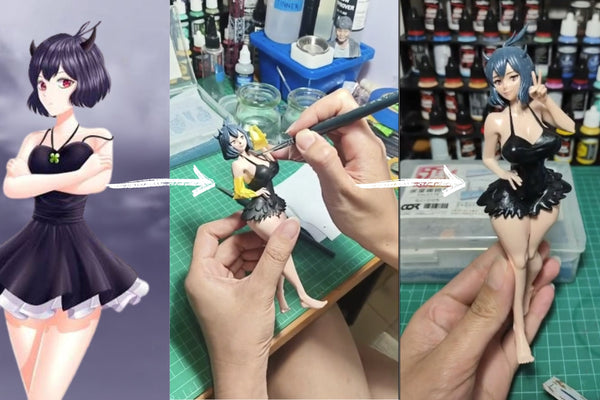
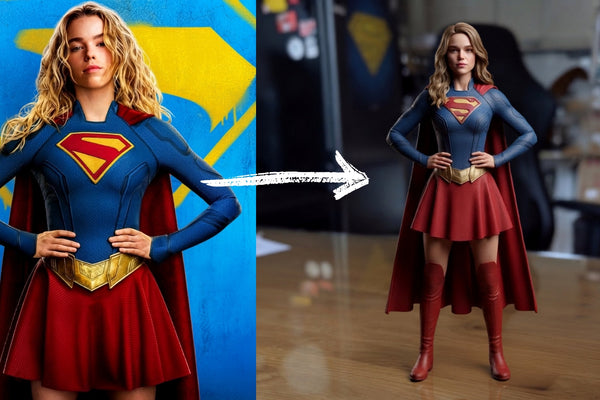
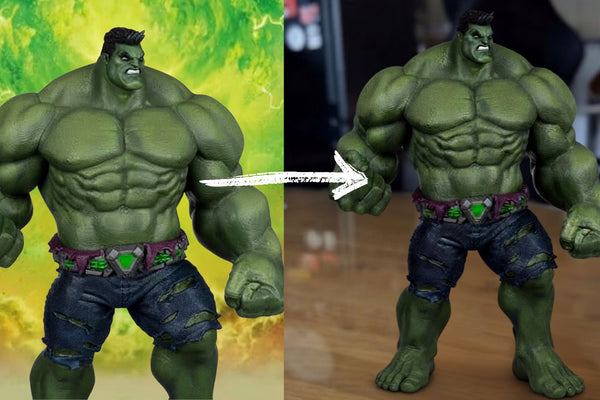
Figuro's commitment to excellence is reflected in its use of 'premium resin' for all its 3D printed products. This material is specifically chosen for its superior ability to retain fine details, ensuring that intricate designs from STL files, be they for human, animal, anime, or superhero figurines, are rendered with exceptional clarity and precision. The ability to handle complex geometries and produce smooth surface finishes makes Figuro an ideal partner for bringing even the most demanding STL designs to life. Furthermore, with options for custom poses and hand-painted finishes, the digital model can be elevated into a truly unique physical artifact, demonstrating the full potential of a well-prepared STL file printed on high-grade equipment.
For those who wish to transform their own meticulously prepared STL files into physical realities, or for those seeking to commission bespoke designs, Figuro provides a professional pathway. The process ensures that every detail, from the structural integrity of the print to the aesthetic finish, meets rigorous standards. With sizes ranging from 8cm (3.1") to 22cm (8.7"), and a 100% refund guarantee if a customer is not satisfied with the preview before printing, Figuro empowers creators to achieve their vision without compromise.
Conclusion: The Art and Science of Resin Printing
The journey from a digital STL file to a high-fidelity resin 3D print is a blend of technical understanding and meticulous execution. Mastering the nuances of STL preparation—from file acquisition and structural integrity checks to strategic orientation and support generation—is fundamental for anyone venturing into or expanding within the realm of resin 3D printing. The capacity of resin printers to capture minute details, especially when utilizing premium materials, offers unparalleled opportunities for creating intricate and beautiful physical objects.
Whether you are designing your own characters, downloading complex models, or seeking to transform a unique digital vision into a tangible keepsake, understanding the bedrock of STL files is your first step. For professional-grade results and to experience the transformative power of premium resin printing, consider exploring the bespoke services offered by Figuro. Unleash the full potential of your designs and 'Turn Moments Into Figurines' – or intricate models – with unmatched quality. Visit getfiguro.com today to start your custom order and see your digital creations come to life with stunning detail.
Bring Your Best Memories into the 3D World
Tired of looking at your favorite moments through a glass screen? Turn those unforgettable photos into something you can actually touch, hold, and display forever. Whether you're chasing jaw-dropping realism with our Realistic 3D Figurines, adding a fun twist to your desk space with a Custom Bobblehead Figurine, or celebrating a milestone love story with a Personalized Anniversary Couple Gift, we custom-sculpt every single piece to tell your unique story.
👉 Explore Figuro's Full Collection & Start Crafting Yours Today!