


Introduction
This article examines the technical considerations for producing, preparing, and submitting game STL files for high-fidelity 3D printing. It is intended for hobbyists, game designers, and printing professionals who require rigorous guidance on mesh integrity, dimensional tolerances, and material behaviour when creating miniatures and game-related figurines. The analysis is purposefully technical and assumes familiarity with CAD and mesh-repair tools.
What is a game STL and why it matters
A game STL is a polygon mesh file exported in the STL format that represents a three-dimensional object intended for tabletop gaming, display, or digital-to-physical prototyping. Unlike generic 3D models, game STLs must satisfy stricter constraints to produce reliable prints at small scales. These constraints include watertight geometry, manifold topology, controlled polygon density, and appropriate feature thickness for long-term durability.
Key characteristics
Watertight meshes: A valid STL must be free of holes. Non-watertight meshes produce slicing errors and unpredictable resin flow in SLA processes.
Manifold geometry: Each edge should belong to exactly two faces. Non-manifold edges cause slicing ambiguity and fragile prints.
Optimized polygon count: Balance between sufficient detail and file manageability. For game miniatures intended at 28-32 mm scale, target polygon counts that preserve facial and clothing detail without excessive triangles.
Workflow for preparing game STL files
The preparation workflow is sequential and systematic. Adopt a repeatable pipeline: model validation, mesh repair, scale and tolerance checks, hollowing if necessary, orientation and support planning, and final export with consistent units.
1. Model validation and repair
Use professional tools such as MeshLab, Netfabb, or commercial CAD suites to run automatic checks. Identify inverted normals, duplicated vertices, non-manifold edges, and isolated shells. Apply the following steps:
- Recalculate normals and unify face orientation.
- Remove duplicate and unused vertices.
- Fill holes and merge close vertices within a small tolerance.
2. Scale, tolerances, and minimum feature size
Determine intended output size. For service providers like Figuro, available figurine sizes range from 8 cm to 22 cm. When scaling from nominal game scales (for example, 28 mm), evaluate structural features such as weapon blades, antennae, and thin armor parts. Common recommendations:
- Minimum wall thickness: Maintain at least 0.8 mm for small protrusions in SLA resin prints; thicker for elements subject to handling.
- Minimum feature size: Avoid features below 0.5 mm unless they are purely decorative and non-load-bearing.
3. Hollowing and drainage
Hollowing large volumes reduces resin usage and post-cure warping. Provide drainage holes sized to allow trapped resin evacuation. Typical practice is to create one to three 3-4 mm diameter holes placed on less visible surfaces. Ensure holes do not compromise the model's structural or aesthetic integrity.
4. Orientation and support strategy
Orientation affects surface quality, support scarring, and print success. Orient the model to minimize the contact area with supports while avoiding large horizontal overhangs. For SLA printing, angling figures between 20 and 45 degrees often yields optimal balance between layer stepping and support placement.
Slicing, resolution, and print parameters
Configuration of layer thickness and exposure parameters is largely machine and resin dependent. For premium resin prints intended for tabletop miniatures, consider the following:
- Layer height: 25 to 50 microns for fine detail; coarser layers reduce print time but may obscure sculptural subtleties.
- Support density: Use spot supports for delicate extremities; increase density for heavy overhangs or neck regions.
- Print orientation: Prefer orientations that reduce the need for excessive support removal near facial features.
Material considerations: premium resin behaviour
Figuro utilises premium resin formulations that retain fine detail and exhibit predictable post-cure dimensional stability. Resin selection impacts flexibility, fragility, and paint adhesion. For game miniatures:
- Rigid, high-detail resins preserve sculpted textures.
- More flexible resins can be selected for parts requiring slight compliance.
Post-cure shrinkage is minimal with high-quality resins but must be accounted for in precision assemblies. Always validate mating surfaces with test prints where dimension-critical tolerances exist.
Post-processing, finishing, and painting
Post-processing steps for SLA-printed game STLs include support removal, careful sanding of scar lines, primer application, and painting. When preparing a model for professional hand-painted finish options offered by services like Figuro, ensure surface topology facilitates paint adhesion (avoid excessive residual support stubs and maintain clean edges).
Recommendations for optimal finish
- Use isopropyl alcohol baths to remove uncured resin followed by thorough UV post-cure.
- Sand at progressive grits to reduce visible layer lines.
- Apply a thin primer coat before final paint to enhance adhesion.
Legal and ethical considerations
When producing game STLs that depict copyrighted characters, intellectual property must be respected. Custom game miniatures derived from commercial game assets may require licensing. For original sculpts intended for sale, maintain provenance and model release documentation.
Submitting STLs to a printing service
When submitting to a service such as Figuro, follow the provider's guidelines precisely. Typical submission requirements include the following:
- File format: STL preferred; maintain a binary STL for compactness.
- Units: Use millimetres and indicate final intended height or provide a scale factor.
- Single-shell models: Submit individual shells as separate files or ensure multipart models are properly separated.
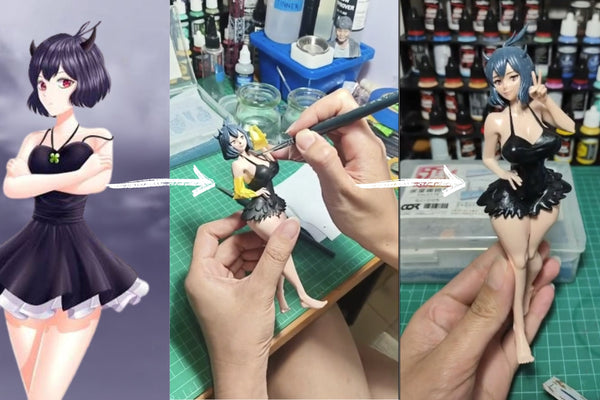
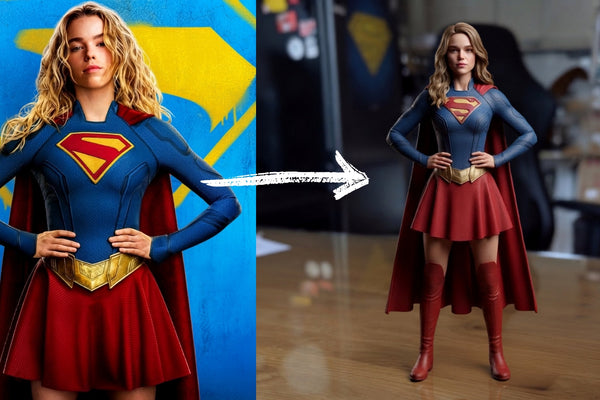
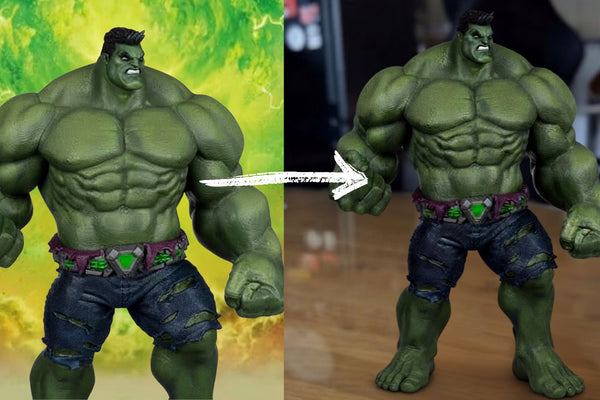
Figuro offers realistic colored 3D printing, hand-painted finishes, custom poses, and custom outfits, manufactured in premium resin and available in sizes from 8 cm to 22 cm. The service provides a 100% refund if the customer does not approve the preview before printing, and free delivery to several regions including the US, China, Thailand, Singapore, India, and Malaysia.
Quality assurance and test prints
Before committing to production runs or large commissions, order a test print of critical components. Use these tests to verify fit, surface quality, and paint response. Iterative refinement reduces waste and accelerates production readiness.
Conclusion and call to action
Producing reliable game STLs demands rigorous mesh validation, considered scaling, and awareness of material limitations. For practitioners seeking professional-grade results, leveraging a specialised printing service that uses premium resin and offers hand-painted finishing streamlines the transition from digital sculpt to display-ready miniature. To explore production options, request a preview, or start a custom order, consider visiting Figuro for technical print capabilities and bespoke finishing options. Begin with a validated STL, and let a professional printing workflow ensure consistent, high-fidelity game miniatures.
Bring Your Best Memories into the 3D World
Tired of looking at your favorite moments through a glass screen? Turn those unforgettable photos into something you can actually touch, hold, and display forever. Whether you're chasing jaw-dropping realism with our Realistic 3D Figurines, adding a fun twist to your desk space with a Custom Bobblehead Figurine, or celebrating a milestone love story with a Personalized Anniversary Couple Gift, we custom-sculpt every single piece to tell your unique story.
👉 Explore Figuro's Full Collection & Start Crafting Yours Today!