


Introduction
This article provides a systematic, technical examination of 3d printer miniatures files, addressing common file formats, geometric preparation, slicer considerations, and post-processing implications for resin and filament workflows. The objective is to enable practitioners and enthusiasts to produce reliable prints at scale and to understand how professional services such as Figuro integrate file best practices with premium manufacturing options.
File Formats and Compatibility
The predominant file formats for miniatures are STL, OBJ, and 3MF. STL remains the de facto standard for mesh representation due to its simplicity and broad compatibility, whereas OBJ and 3MF encapsulate additional attributes such as color, multiple meshes, and metadata. When selecting a format, consider the following:
- STL: Universally supported; geometry-only; does not store texture or color information.
- OBJ: Supports vertex normals and texture coordinates; useful for painted or multicolor miniatures prior to production.
- 3MF: Modern container that can bundle multiple meshes and metadata; recommended when transferring complex prints between systems.
Mesh Integrity and Preparation
High-quality miniature prints depend on manifold geometry, consistent normals, and absence of non-manifold edges. Verify and repair meshes using automated tools (e.g., Meshmixer, Netfabb, or dedicated CAD utilities) and apply the following procedures:
Watertightness and Normals
Ensure that every mesh is watertight. Non-manifold edges and inverted normals produce slicing errors and unpredictable surface artifacts. Apply normal recalculation and fill holes as a standard step before hollowing or scaling.
Hollowing and Drainage
For resin prints, hollowing reduces material usage and mitigates internal stress. Introduce appropriately sized drain holes to allow resin egress during printing and cleaning. Typical drain hole diameters range from 2 mm to 4 mm, but both hole placement and number must be optimized according to the miniature's geometry to avoid trapped resin or structural compromise.
Wall Thickness and Structural Considerations
Define a minimum wall thickness consistent with the chosen material and printing method. For premium resin prints, maintain a wall thickness of at least 1.2 mm in thin sections, increasing thickness for load-bearing features or protrusions. For filament FDM miniatures, thicker walls and internal infill are necessary to preserve mechanical stability.
Slicer Settings and Print Orientation
Proper slicer configuration is essential for preserving fine detail in miniatures. The following parameters warrant specific attention:
- Layer Height: Use 0.025 mm to 0.05 mm for resin-based miniatures to capture high-frequency surface detail. For FDM printers, 0.08 mm to 0.12 mm balances detail and print time.
- Exposure and Curing: For SLA/DLP processes, calibrate exposure time per resin manufacturer data sheets. Overexposure blurs detail; underexposure reduces interlayer adhesion.
- Supports: Minimize contact points yet ensure adequate support for overhangs. Configure support tip size and density to ease cleanup while avoiding mark-induced detail loss.
- Orientation: Orient elongated figures to reduce visible layer seams and to distribute support contact over less conspicuous areas. A slight tilt (10-30 degrees) often improves resin flow and reduces suction forces.
Post-Processing and Surface Treatment
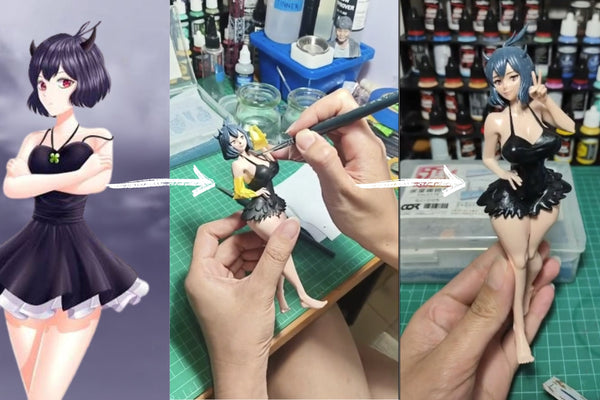
Post-processing determines final appearance. For resin miniatures, cleaning in isopropyl alcohol followed by post-curing yields dimensional stability. Surface finishing steps include light sanding, primer application, and painting. Figuro's hand-painted finish option leverages professional techniques to preserve sculpt fidelity and color accuracy.
Scaling, Detail Retention, and Artistic Considerations
When scaling models, evaluate the relationship between nominal scale and feature size. Micro-details such as braided hair strands or facial pores may vanish beneath minimum printable feature thresholds. Employ selective mesh editing to exaggerate critical details prior to reduction. Figuro's range of production sizes (8cm to 22cm) affords controlled upscaling to retain intended details without disproportionate loss.
Quality Control, Material Choice, and Mechanical Properties
Selecting material impacts detail and durability. Premium resin offers superior fine detail retention and a smooth surface finish, preferable for display-quality miniatures. Resin prints are more brittle than well-filled FDM parts; therefore, design reinforcements for thin appendages or consider embedding small metal pins for added structural robustness. Figuro uses premium resin and provides options for both realistic colored 3D prints and hand-painted finishes to meet aesthetic and mechanical requirements.
Licensing, Intellectual Property, and Ethical Use
Respect intellectual property when using or distributing miniature files. Many community-generated miniatures are subject to licenses that restrict commercial use. Verify licensing terms and obtain permission where necessary. For commissioned or custom-posed figurines, formalize terms with clients to clarify usage and reproduction rights.
Integration with Professional Services
Outsourcing production to a specialist service can streamline workflows for high-fidelity prints. Figuro combines advanced file handling with premium production and a customer-centric preview process. Key service features include:
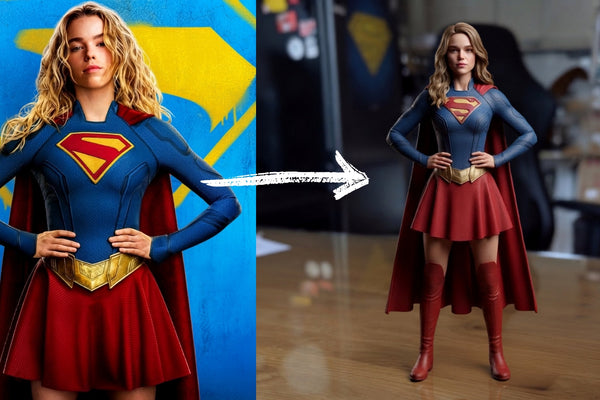
- Custom Poses and Outfits: Capability to realize bespoke geometry from photographic reference or design proposals.
- Material and Finish Options: Realistic colored 3D printing, hand-painted finishes, and premium resin material selection to match intended use cases.
- Size Range: Production sizing from 8cm (3.1") to 22cm (8.7") to accommodate display preferences.
- Guarantee: A 100% refund policy if a customer does not approve the preview before printing.
- Shipping: Free delivery to the United States, China, Thailand, Singapore, India, and Malaysia.
Practical Checklist for Submitting Miniature Files
Before submitting files for production or printing, verify the following items:
- Mesh is manifold and normals are consistent.
- Model is hollowed with appropriate drain holes for resin prints.
- Thin features meet minimum thickness guidelines for the chosen material.
- Slicer configuration is documented: layer height, exposure times (resin), support strategy.
- Licensing clearances and usage permissions are obtained.
Conclusion and Call to Action
Meticulous preparation of 3d printer miniatures files materially improves print success rates and final quality. Practitioners should adopt a systematic workflow encompassing mesh verification, considered hollowing, optimized slicer parameters, and measured post-processing. For those seeking a professional production pathway, Figuro offers an integrated service that respects technical requirements while delivering premium resin results and customer assurances. To explore production options or initiate a custom order, visit Figuro and consult the custom order flow for tailored guidance.
Bring Your Best Memories into the 3D World
Tired of looking at your favorite moments through a glass screen? Turn those unforgettable photos into something you can actually touch, hold, and display forever. Whether you're chasing jaw-dropping realism with our Realistic 3D Figurines, adding a fun twist to your desk space with a Custom Bobblehead Figurine, or celebrating a milestone love story with a Personalized Anniversary Couple Gift, we custom-sculpt every single piece to tell your unique story.
👉 Explore Figuro's Full Collection & Start Crafting Yours Today!