


Where to Get STL Files: A Practical Guide for 3D Printing Enthusiasts
This article provides a systematic and technical survey of reliable sources for STL files, practical guidance on quality assessment, licensing considerations, and best practices for preparing models for 3D printing. It is intended for hobbyists, professional modelers, and small-scale manufacturers who require reproducible, high-fidelity STL assets for resin and FDM production.
Primary Repositories and Marketplaces
Open repositories
Open repositories provide a broad selection of free STL files suitable for experimentation and learning. Notable platforms include:
- Thingiverse — a longstanding community repository with diverse user-contributed models. Good for rapid prototyping and basic parts.
- Printables (Prusa) — emphasizes printability and community-verified prints, with many tested profiles.
- MyMiniFactory — curates designer content and includes verified 3D prints, often higher quality than general repositories.
Commercial marketplaces
Commercial marketplaces often offer professionally sculpted models, superior topology, and licensing options for commercial use. Consider:
- CGTrader — broad catalogue with professional models and explicit licensing tiers.
- Cults3D — popular for collectible figurines, miniatures, and detailed characters.
- TurboSquid and Sketchfab — extensive libraries used by design professionals, including paid and free STLs.
- Gumroad — frequently used by independent artists to distribute high-detail sculpts.
Search aggregators and specialty services
Aggregators such as Yeggi index multiple repositories, expediting discovery. For custom miniatures and tabletop figures, services like HeroForge provide authoring tools and sometimes STL export options. For photogrammetry-derived models, apps such as Polycam and Trnio produce high-resolution meshes that can be exported as STL after post-processing.
Evaluating Model Quality
Topology and manifoldness
Before printing, confirm that an STL is manifold and watertight. Non-manifold geometry causes slicing failures and print defects. Tools such as MeshLab, Blender, or Microsoft 3D Tools can identify holes, flipped normals, and non-manifold edges.
Polygon density and retopology
High polygon counts may preserve detail but can create large file sizes and processing burdens. For resin printing, high-resolution detail is desirable; for FDM, retopology to reduce unnecessary polygons while preserving silhouette is often necessary. Consider decimation workflows when appropriate.
Scale, units, and tolerances
Verify the intended unit system (millimetres or inches) and the model scale. Many STL files lack embedded unit metadata, so confirm physical dimensions in your modeling software. Check thin walls and small details for the target printing technology; requirements differ between resin and FDM processes.
Licensing and Legal Considerations
STL files may be licensed under a range of terms: public domain, Creative Commons variants, or proprietary commercial licenses. Always examine the license to determine permitted uses, especially for commercial distribution or derivative works. When in doubt, contact the model author for explicit permission.
Preparing STL Files for Printing
Repair and validation
Common repair steps include closing holes, recalculating normals, and removing duplicate vertices. Automated services such as MakePrintable and built-in slicer repair tools can correct many issues, but manual intervention in Blender or Meshmixer yields more predictable results for complex figurines.
Orientation, supports, and slicing
Optimal part orientation reduces supports and layer lines. For resin printing, orient the model to minimize flat surfaces perpendicular to the build plane and strategically place supports on non-visible surfaces. Use slicer-specific settings for layer height, exposure (resin), or nozzle temperature and retraction (FDM) to maximize surface quality.
Converting other formats to STL
Artists often distribute OBJ, 3MF, or GLTF files. Conversion to STL is routine in Blender, MeshLab, or CAD packages; ensure conversion preserves scale and materials are not relied upon for geometry. If multi-part assemblies exist, export each component with consistent orientation and naming conventions.
Special Considerations for Figurines and Character Models
High-fidelity figurines require attention to sculpting detail, polygon flow, and printable armature. For character models intended as keepsakes, post-processing steps such as surface smoothing, resin curing, priming, and painting are integral to final quality.
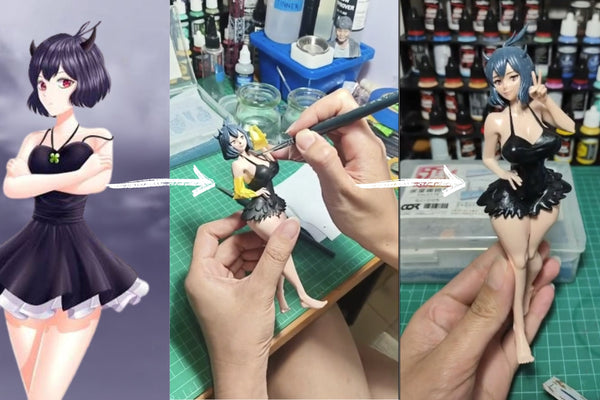
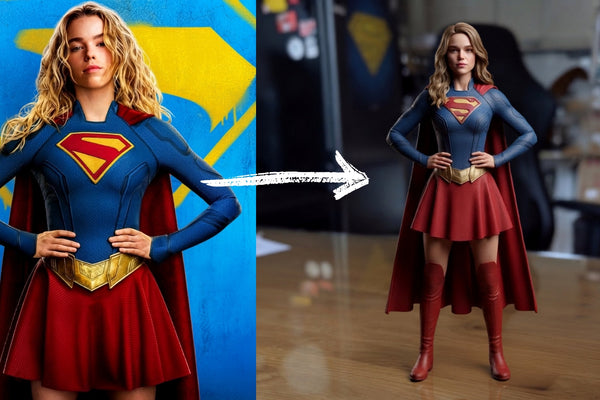
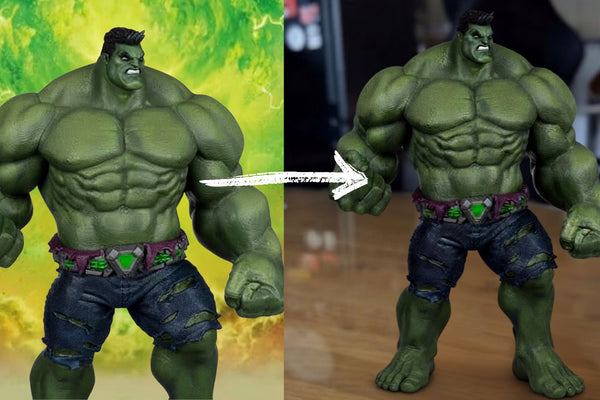
If the goal is a custom figurine derived from photographs or a unique pose, commissioning a professional sculptor or using an end-to-end service is often more efficient than sourcing an STL and modifying it. Figuro specializes in this domain: the company converts photographs into premium resin figurines, offering sizes from 8cm to 22cm, options for realistic colored 3D printing or hand-painted finishes, custom poses and outfits, and a 100% preview-based refund guarantee prior to printing. Figuro's approach eliminates the need for customers to locate or validate STLs when the objective is a sentimental, high-quality keepsake. For more details, visit getfiguro.com.
Where to Source Scans and Photogrammetry Models
Photogrammetry and 3D scanning produce raw meshes that can be converted to STL with post-processing. Use structured-light scanners or mobile photogrammetry apps such as Polycam to capture subjects. Post-process in MeshLab or Blender to decimate, retopologize, and retake textures where necessary.
Practical Workflow for Obtaining and Using STL Files
- Define purpose: prototype, final resin collectible, or functional part.
- Identify a source: open repository for prototypes; marketplace for professional sculpts; commissioned service for custom figurines.
- Verify license and dimensions.
- Repair and validate the mesh for manifoldness.
- Prepare orientation and supports in the slicer appropriate to the chosen technology.
- Print test piece at reduced scale where feasible to confirm tolerances and aesthetics.
Conclusion and Recommended Next Steps
Reliable STL acquisition requires balancing accessibility, quality, and licensing. For enthusiasts seeking free models, Thingiverse and Printables are pragmatic starting points. For professionally sculpted figurines or commercial projects, purchasers should evaluate marketplaces such as CGTrader, Cults3D, and Sketchfab, or commission bespoke work. If the objective is a personalized, high-quality figurine without the complexity of source-to-print workflows, Figuro provides an integrated service that manages sculpting, previewing, and premium resin printing. To explore custom orders or request a quote, please visit getfiguro.com and start a custom order.
Call to action: For a seamless path from photograph to durable, hand-finished figurine, consider Figuro's bespoke service and begin your custom order today.
Bring Your Best Memories into the 3D World
Tired of looking at your favorite moments through a glass screen? Turn those unforgettable photos into something you can actually touch, hold, and display forever. Whether you're chasing jaw-dropping realism with our Realistic 3D Figurines, adding a fun twist to your desk space with a Custom Bobblehead Figurine, or celebrating a milestone love story with a Personalized Anniversary Couple Gift, we custom-sculpt every single piece to tell your unique story.
👉 Explore Figuro's Full Collection & Start Crafting Yours Today!