


Introduction to STATU3D: A Technical Overview
STATU3D denotes a class of high-fidelity 3D printed statuettes designed for accurate volumetric reproduction of human, animal, and object subjects. This article provides an analytical exposition of the STATU3D process as implemented by Figuro, emphasizing manufacturing methodology, material science, dimensional constraints, and quality assurance protocols. The intent is to inform engineers, collectors, and technical decision-makers about the capabilities and limitations of contemporary 3D statuette production.
Manufacturing Methodology
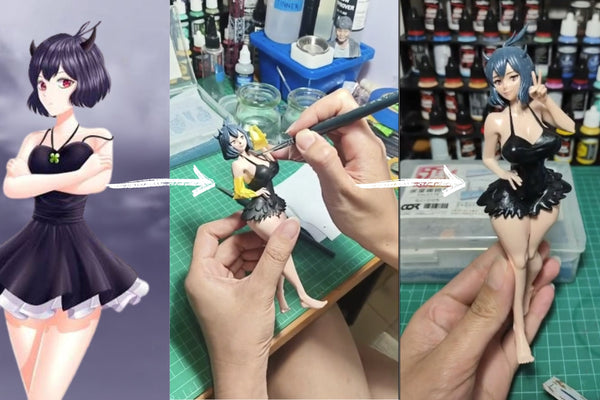
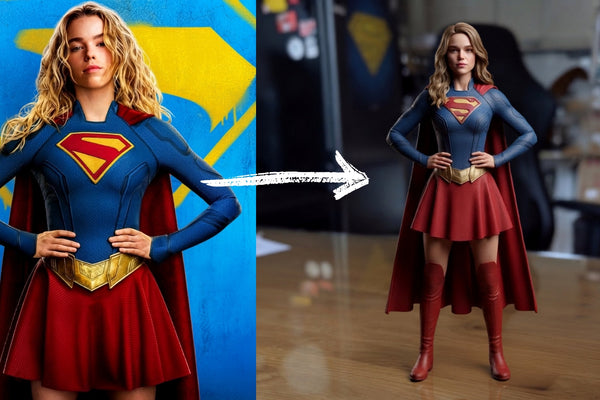
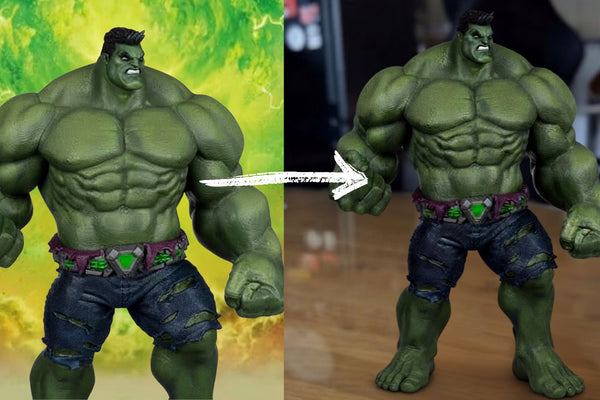
The STATU3D workflow integrates photogrammetry and advanced stereolithography (SLA) or digital light processing (DLP) 3D printing. Initial input data is typically a set of calibrated photographs or a three-dimensional scan. These data are processed through mesh reconstruction algorithms to generate a watertight 3D model. Subsequent steps include retopology for printability, hollowing for resin economy, and support generation optimized for minimal surface degradation.
Photogrammetric Data Acquisition
Photogrammetry for STATU3D requires multi-angle imaging under controlled lighting to minimize specular highlights and shadow-induced artifacts. The imaging protocol often recommends 20 to 80 photographs with uniform exposure and a consistent camera-subject distance. Calibration markers and diffuse polarizing filters improve surface texture fidelity.
Mesh Optimization and Print Preparation
Mesh optimization comprises decimation, hole filling, and normal smoothing while preserving critical anatomical and textural features. Hollowing strategies include drainage hole placement and wall thickness determination; typical minimum wall thickness for STATU3D prints using premium resin is 1.5 to 2.5 millimeters to balance structural integrity and material economy. Support placement algorithms favor contact points on low-salience areas to facilitate post-processing.
Materials: Premium Resin Characteristics
STATU3D production at Figuro employs premium photopolymer resins formulated for fine detail retention and dimensional stability. These resins exhibit low shrinkage coefficients during polymerization and high elongation at break relative to economy resins. Key material properties include:
- High-resolution feature reproduction (capable of sub-0.1 millimeter surface detail).
- Low volumetric shrinkage to maintain dimensional accuracy across sizes.
- Post-cure stability and resistance to yellowing under standard indoor illumination.
Resin selection is tailored to finish options: realistic colored 3D printed surface requires resins compatible with color infusion or direct full-color printing processes, whereas hand-painted finish employs a resin optimized for primer adhesion and pigment saturation.
Dimensional Range and Resolution
STATU3D products are manufactured within a standardized size envelope at Figuro, ranging from 8 cm (3.1 inches) to 22 cm (8.7 inches). The selection of size impacts achievable feature fidelity and structural considerations. Typical layer heights for SLA/DLP production are between 25 and 100 microns. Smaller layer heights improve surface smoothness and fine-detail reproduction but increase print time and post-processing labor.
Resolution Trade-offs
Resolution planning must account for the end-use of the statuette. For portrait-quality busts where facial microtexture is critical, a 25 to 50 micron layer height is advisable. For larger, stylized figures where macro forms dominate, 75 to 100 micron layers yield acceptable surface quality with improved throughput.
Finishing Options and Post-Processing
Figuro provides a range of finishing options for STATU3D outputs. These include direct realistic color printing, artisan hand-painted finishing, and clear coat sealing. The post-processing pipeline comprises support removal, solvent washing, UV post-curing, sanding or micro-milling of seam lines, and application of primers and pigments. Hand-painted finishes follow spectrally consistent color matching protocols to achieve faithful likenesses.
Surface Treatment Protocols
Surface treatment is governed by objective measures of gloss, colorimetric accuracy, and tactile uniformity. Clear coats are selected to balance scratch resistance with preservation of color saturation. When painting is performed, layers are applied in controlled humidity and temperature environments to ensure pigment adhesion and curing uniformity.
Quality Assurance and Customer Preview
Quality assurance for STATU3D is a multi-stage process. Automated checks validate mesh integrity, wall thickness, and overhang tolerances. Human inspection evaluates likeness and surface fidelity. Figuro extends a 100% refund policy if the customer does not approve the digital preview prior to printing, thereby mitigating the risk of unsatisfactory physical output. This pre-print approval step is integral to maintaining reproducibility and customer satisfaction.
Dimensional Verification and Tolerances
Dimensional verification utilizes high-precision calipers and optical metrology to confirm that printed parts conform to expected tolerances. Typical dimensional tolerance targets are ±0.5% for linear dimensions under 150 mm, acknowledging that post-cure shrinkage compensation is incorporated into slicing parameters.
Applications and Use Cases
STATU3D is applicable to a spectrum of technical and commercial domains. Use cases include collectible figurines for hobbyists, prototype statuettes for product design validation, architectural maquettes at small scale, and customized sales displays. The process is also suitable for limited-run merchandising where fidelity and positional customization are required.
Ordering Workflow and Customization Options
The ordering workflow for a STATU3D unit typically proceeds as follows: customer uploads photographs or 3D scans via Figuro's order portal, an engineering review is conducted, a digital preview is produced for client approval, and upon approval printing commences. Customization options include pose alteration, outfit modification, and scaling to specified heights between 8 cm and 22 cm. Figuro provides free shipping to the United States, China, Thailand, Singapore, India, and Malaysia.
Economic and Environmental Considerations
From an economic perspective, STATU3D production balances fixed setup costs with variable material and labor inputs. Hollowing strategies and optimized nesting reduce resin consumption and printing time. Environmentally, photopolymer resins present challenges for recycling; Figuro mitigates impact through resource-efficient hollowing, minimization of failed prints via preview approvals, and concentration of post-processing waste for proper disposal.
Conclusion and Call to Action
The STATU3D paradigm represents a mature integration of photogrammetry, high-resolution additive manufacturing, and controlled finishing protocols. For stakeholders seeking precise, customizable statuettes with rigorous quality guarantees, STATU3D as implemented by Figuro offers a technically robust solution. To evaluate feasibility for a specific application or to initiate a custom order, please visit Figuro at https://getfiguro.com and submit photographic inputs for an engineering review.
Note: Additional technical documentation and materials datasheets are available upon request from Figuro's engineering team.
Bring Your Best Memories into the 3D World
Tired of looking at your favorite moments through a glass screen? Turn those unforgettable photos into something you can actually touch, hold, and display forever. Whether you're chasing jaw-dropping realism with our Realistic 3D Figurines, adding a fun twist to your desk space with a Custom Bobblehead Figurine, or celebrating a milestone love story with a Personalized Anniversary Couple Gift, we custom-sculpt every single piece to tell your unique story.
👉 Explore Figuro's Full Collection & Start Crafting Yours Today!