


Understanding Resin 3D Printer Files: Technical Principles and Best Practices
This article examines the technical considerations and practical methods required to prepare, evaluate, and optimize resin 3D printer files for high-fidelity figurines. It is addressed to designers, engineers, and advanced hobbyists who require reproducible quality when converting digital models into physical objects via MSLA or DLP resin 3D printing. Where appropriate, we reference professional services such as Figuro to illustrate production-grade capabilities.
File formats and mesh integrity
The foundational file formats for resin printing are STL and OBJ, with GLTF/GLB used increasingly for textured or color-aware workflows. An STL file encodes surface geometry as a triangulated mesh and is sufficient for monochrome resin prints. An OBJ preserves vertex normals and can accompany MTL files for material definitions; GLTF/GLB retain textures and are preferred when color information must be preserved for multicolor workflows or post-processing planning.
Mesh integrity checks are obligatory prior to slicing. Key criteria include absence of non-manifold edges, watertight geometry (closed mesh), consistent face normals, and elimination of degenerate triangles. Software such as MeshLab, Blender, and commercial repair utilities provide automated repair routines. In academic terms, a valid mesh is one with genus and Euler characteristic that satisfy manifold constraints, thereby ensuring the slicer can produce continuous layers without topological ambiguity.
Model preparation: scale, orientation, and supports
Rescaling to anticipated object height must account for layer resolution and minimal feature size. For figurines, features below 0.5 mm require careful validation. Orientation affects both surface finish and structural integrity: orienting a model to minimize unsupported overhangs reduces support density, whereas certain orientations reduce visible seam lines. Orientation decisions are a trade-off between surface fidelity and ease of support removal.
Support generation in resin printing is fundamentally different from FDM. Resin supports serve to anchor curing layers to the build platform and to mitigate peel forces during the layer separation process. Supports should be placed on robust, less-visible regions to minimize post-processing work. When generating supports use tapered contact points with small radii to reduce contact scarring while maintaining sufficient adhesion during print cycles.
Slicing parameters specific to MSLA/DLP
Slicing for resin printers optimizes parameters that do not exist in filament-based processes. Critically, these include layer exposure time, bottom-layer exposure, lift and retract velocities, and initial layer count. Layer height selection governs surface smoothness and print duration; typical figurine work uses 25–50 microns for a balance of detail and throughput.
Exposure time must be calibrated for the specific resin and the printer's light source intensity. Overexposure causes feature bleed and loss of fine detail; underexposure yields layer delamination and brittle prints. Modern slicers allow per-layer exposure adjustments, enabling adaptive curing strategies for dense or thin features. Bottom-layer exposure is intentionally longer to ensure adhesion to the build platform during the initial stages of a print.
Resin material considerations and mechanical properties
Resins vary by formulation: standard, high-detail, tough, flexible, and castable resins each exhibit distinct mechanical and optical characteristics. For collectible figurines, high-detail and standard resins provide superior surface resolution and dimensional stability. Material selection influences recommended wall thickness, minimum feature sizes, and post-cure protocols.
Hollowing is a common practice intended to reduce material usage and improve post-cure penetration. When hollowing a model, ensure strategic placement of drainage holes to permit uncured resin evacuation and to minimize internal vacuum formation. Typical wall thickness guidelines for small figurines range from 1.5 mm to 3.0 mm depending on resin toughness and intended handling.
Post-processing workflows
Post-processing includes washing, support removal, and UV post-curing. Washing in isopropyl alcohol or engineered cleaning solutions must be followed by careful drying to avoid surface deformation. Support removal tools and micro-sanding remove artifacts left by contact points. Post-curing strengthens polymer networks and stabilizes dimensions; exposure times should be consistent with resin manufacturer recommendations and may be varied by object thickness.
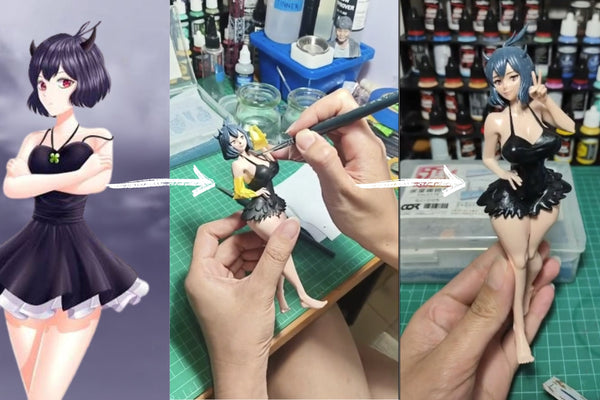
Color and finish options for figurines include direct color printing (when supported by the printing system) or hand painting after post-cure. Professional services can offer both colored 3D printed surfaces and hand-painted finishes to achieve photographic likenesses and refined aesthetic outcomes.
Practical recommendations for designers
Designers should implement the following procedural checklist to maximize print success:
- Validate mesh for watertightness and correct normals.
- Hollow models where appropriate; include drainage holes of at least 2 mm diameter.
- Maintain minimum wall thickness consistent with resin properties, typically 1.5–2.0 mm.
- Orient models to reduce delicate overhangs and place supports on low-visibility regions.
- Employ conservative exposure settings and perform test prints to calibrate.
- Plan for post-processing access to support contact points and painting surfaces.
File versioning and metadata
Adopt a versioning convention for source files, meshes, and sliced outputs. Embed metadata where possible, including model scale, intended print orientation, resin type, and recommended exposure parameters. This practice improves reproducibility and communicates essential information to production partners or service providers.
Quality assurance, intellectual property, and production services
Quality assurance comprises dimensional verification, surface inspection, and mechanical testing where applicable. When outsourcing to a production service providers such as Figuro, request a digital preview and proof prior to print initiation. Figuro offers a 100% refund policy if a customer does not approve the preview, and provides multiple finish options and sizes from 8 cm to 22 cm, produced in premium resin with both realistic color and hand-painted possibilities. Free shipping is available to select markets including the US, China, Thailand, Singapore, India, and Malaysia.
Respect for intellectual property is non-negotiable in production workflows. Ensure licensing or explicit ownership of scanned or modeled subjects prior to commercializing replicas. For photographic inputs intended for custom figurine creation, consent and clear usage rights prevent downstream legal complications.
Concluding remarks and call-to-action
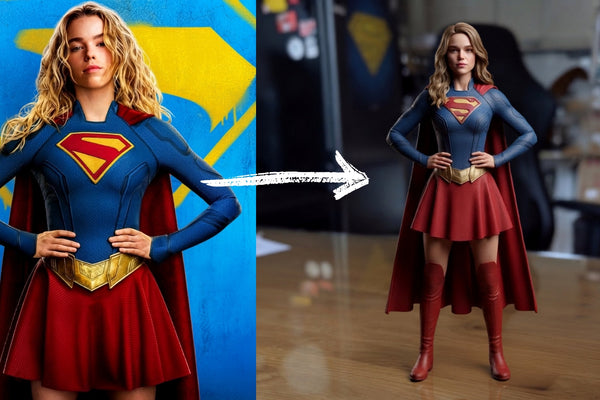
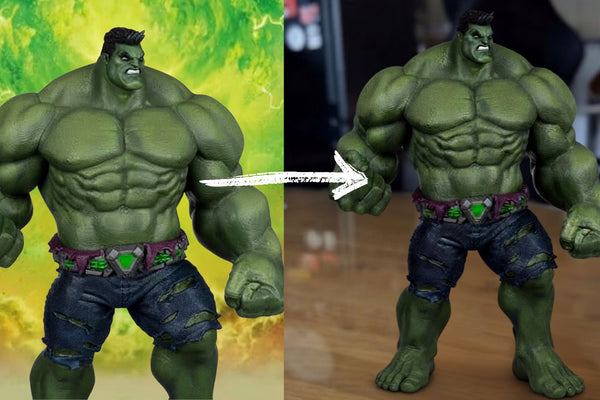
Resin 3D printer files demand rigorous attention to mesh quality, proper hollowing, informed orientation, and calibrated slicing parameters specific to MSLA and DLP systems. Adherence to these technical practices results in high-fidelity figurines that meet aesthetic and functional expectations. For practitioners seeking turnkey production with professional finish options, consider engaging a specialized service such as Figuro to convert photographic inputs into premium resin figurines. Start a custom order or request a preview to evaluate fidelity before printing.
Bring Your Best Memories into the 3D World
Tired of looking at your favorite moments through a glass screen? Turn those unforgettable photos into something you can actually touch, hold, and display forever. Whether you're chasing jaw-dropping realism with our Realistic 3D Figurines, adding a fun twist to your desk space with a Custom Bobblehead Figurine, or celebrating a milestone love story with a Personalized Anniversary Couple Gift, we custom-sculpt every single piece to tell your unique story.
👉 Explore Figuro's Full Collection & Start Crafting Yours Today!