


Introduction
The contemporary hobbyist seeks both technical fidelity and creative control when producing a custom action figure. This article explicates the methodological considerations, material constraints, and recommended workflows for a make-your-own action figure kit derived from 3D printed components. The exposition is oriented toward skilled amateurs and professional modders who desire a rigorous, reproducible approach to kit assembly, finishing, and customization.
Conceptual Overview of an Action Figure Kit
An action figure kit, in the present context, is defined as a set of discrete, manufactured components intended for final assembly, articulation, and surface finishing by the end user. Typical kits include a torso, limbs, head variants, accessory elements, and optional joint hardware. The kit paradigm enables modularity: collectors may select poses, scale, and surface treatment independently. When realized through additive manufacturing, kits offer exceptional geometric complexity, rapid iteration, and consistent dimensional tolerances.
Intended Outcomes and Use Cases
Manufacturers and designers should stipulate the intended use cases for a kit prior to production. Use cases include display models with fixed poses, semi-articulated figures with replaceable joints, and hybrid collectables that combine printed parts with metal or injection-molded components. Each use case imposes different tolerances and material requirements.
Material Selection and Its Implications
Material selection governs mechanical performance, surface fidelity, and painting strategy. Premium resin, as used in high-resolution 3D printing, offers fine detail retention and a surface amenable to sanding and priming. Resin permits thin-walled components and crisp sculptural features; however, it is inherently more brittle than thermoplastics used in injection molding. Designers should therefore employ filleting at stress concentrations and design generous overlap geometries where joints will bear load.
Resin Grades and Post-Processing
Resin grades differ in elongation at break, tensile strength, and glass transition temperature. Select a resin with balanced toughness for articulated kits; if extreme articulation is required, incorporate metal pins or insert nuts to distribute stress. Post-processing steps such as isopropyl alcohol washing, UV curing, and controlled annealing improve dimensional stability and mechanical resilience. All finished parts intended for painting should be sanded and primed using a compatible primer to ensure adhesion.
Design Considerations for Kit Components
Robust design reduces fitment issues during assembly. Key considerations include alignment features, toleranced joint sockets, and keyed connectors for unambiguous orientation. Designers should document recommended adhesives and mechanical fasteners for each joint. For user-friendly assembly, provide multiple head or hand options with clearly labeled attachment points.
Scaling and Proportional Integrity
Scale selection affects both aesthetic and structural attributes. Figuro produces custom figurines in sizes ranging from 8cm (3.1 in) to 22cm (8.7 in); for articulated action figure kits, the recommended minimum scale is typically 12cm to ensure sufficient geometry for functional joints. At smaller scales, joints require specialized miniaturized hardware which can complicate assembly for non-technical users.
Fabrication Methods and Tolerances
Additive manufacturing technologies relevant to kits include stereolithography (SLA) and digital light processing (DLP). These processes produce high-resolution features suitable for facial detail and accessory ornamentation. Tolerancing strategies should anticipate post-cure shrinkage; therefore, nominal clearances must be empirically derived and documented for repeatability. For articulated systems, test prints of joint geometries should be evaluated across multiple specimens to verify consistent friction and retention characteristics.
Quality Control Protocols
A quality control protocol for kits includes dimensional inspection, surface quality assessment, and fit trials. Provide customers with assembly guides and pre-print previews when custom components are commissioned. Figuro offers a pre-print preview and a 100% refund policy if the preview does not meet expectations, which reduces uncertainty for bespoke orders.
Assembly, Finishing, and Painting Workflow
The assembly workflow is sequential: dry-fit all components, sand mating surfaces, and test articulation prior to adhesive application. For semi-permanent joints, cyanoacrylate adhesives paired with accelerator provide immediate set; for more permanent fixes, two-part epoxies yield superior shear strength. Priming is essential: apply a high-quality primer compatible with resin to evaluate surface imperfections and guide subsequent sanding.
Painting Techniques for Durable Finishes
Use acrylic or enamel systems formulated for miniature painting. Begin with an isolation coat to prevent solvent interactions with primer, then build color through thin, opacified layers. For realistic figures, consider pre-shaded undercoats and selective dry-brushing to enhance surface relief. Optionally, a varnish either matte or gloss may be applied to protect the finish and unify the appearance.
Customization Options and Practical Recommendations
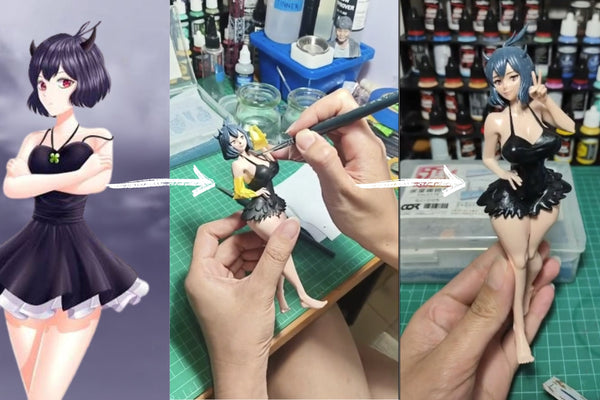
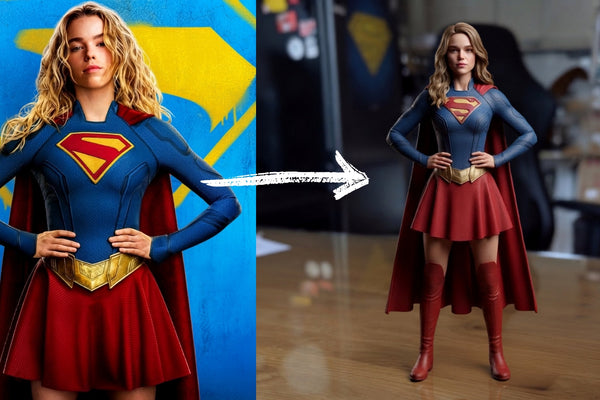
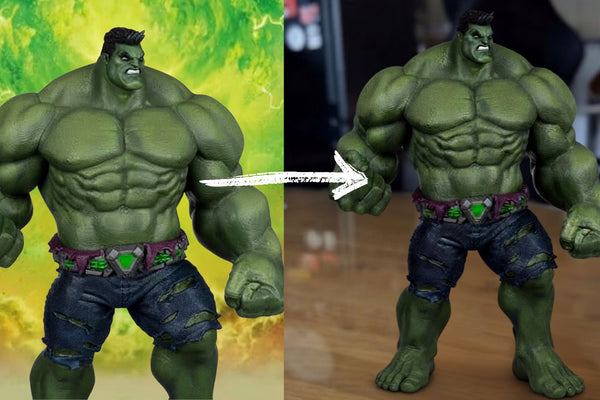
Customization may include alternative heads, hands, accessories, and clothing elements. Provide customers with CAD previews and exploded views to illustrate assembly sequence and part orientation. Encourage the use of mechanical inserts where repetitive disassembly is anticipated. For collectors seeking a fully finished product, Figuro supplies both realistic colored 3D printed and hand-painted finishes as available options.
Ordering Bespoke Components and Professional Services
When commissioning custom elements from a service provider, supply high-quality reference photographs and precise dimensions. Figuro accepts custom orders and provides free shipping to multiple jurisdictions, including the United States, China, Thailand, Singapore, India, and Malaysia. The vendor's material specifications, size range, and finish options should be reviewed before finalizing the design brief.
Conclusion and Call to Action
In summary, a make-your-own action figure kit realized through premium resin 3D printing combines dimensional accuracy with artistic flexibility. Successful kits result from deliberate material selection, rigorous tolerancing, and clear assembly documentation. For practitioners interested in commissioning custom components or complete kits, visit Figuro to examine service options or begin a custom order. The provider's preview guarantee and available finish options reduce project risk and expedite realization of bespoke figures.
Supplementary note: For technicians seeking further details on recommended resin grades, joint geometries, or post-processing parameters, maintain correspondence with the manufacturer to obtain technical sheets and test prints prior to full production runs.
Bring Your Best Memories into the 3D World
Tired of looking at your favorite moments through a glass screen? Turn those unforgettable photos into something you can actually touch, hold, and display forever. Whether you're chasing jaw-dropping realism with our Realistic 3D Figurines, adding a fun twist to your desk space with a Custom Bobblehead Figurine, or celebrating a milestone love story with a Personalized Anniversary Couple Gift, we custom-sculpt every single piece to tell your unique story.
👉 Explore Figuro's Full Collection & Start Crafting Yours Today!