


Introduction
Custom action figures represent a synthesis of digital fabrication, traditional finishing, and personalised design. For collectors, product designers, and hobbyists, acquiring a bespoke action figure entails a sequence of deliberate technical decisions. This article explicates the necessary stages to obtain a high-fidelity custom action figure, emphasising digital preparation, 3D printing techniques, material selection, and quality assurance processes. It is intended for an audience with technical interest in additive manufacturing and collectible-grade figurines.
1. Define Scope and Purpose
Before engaging a manufacturer or artisan, determine the intended purpose of the custom action figure. Will it serve as a display piece, a playable toy, a prototype for mass production, or a commemorative object? The purpose dictates several downstream choices, including scale, articulation, material, and surface finish.
1.1 Choosing Size and Scale
Scale selection impacts visual fidelity and mechanical complexity. Common collector scales range from small desktop sizes to large display models. Companies such as Figuro offer figurine sizes from 8cm (3.1") to 22cm (8.7"). Smaller scales reduce material consumption and printing time, while larger scales permit finer detail and more sophisticated articulation systems.
1.2 Intended Functionality
Decide whether the figure requires articulation, interchangeable parts, or mounting hardware. Action figures with multiple points of articulation necessitate robust joint design and often a different internal structure than static figurines. For static display models, attention shifts to surface fidelity and colour reproduction.
2. Prepare Reference Materials
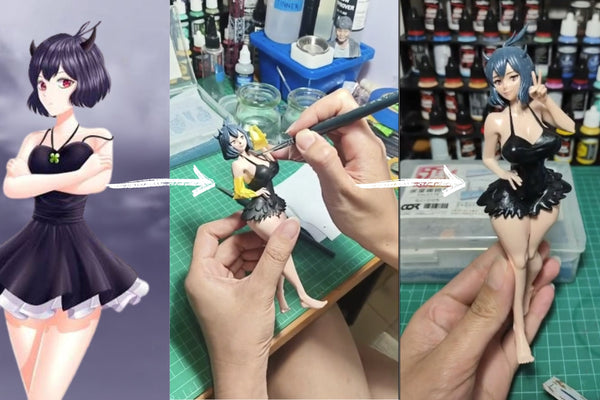
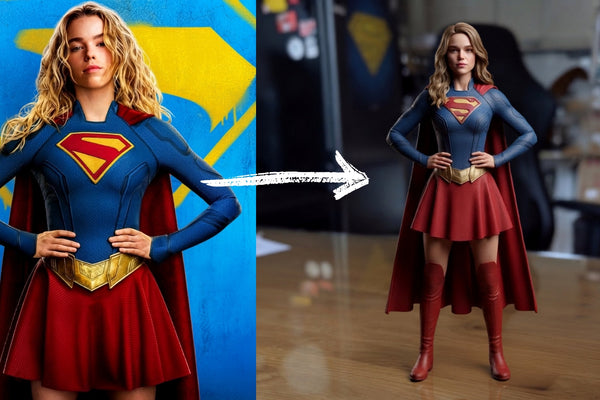
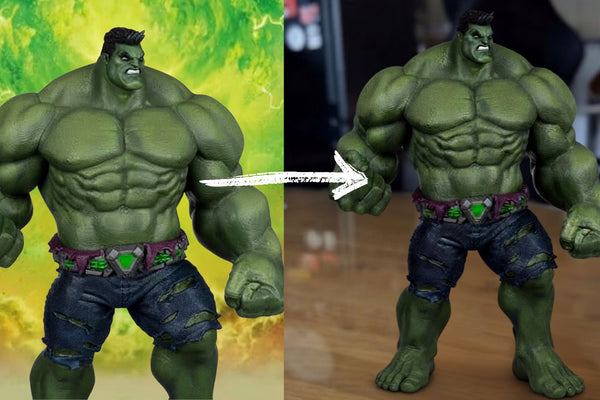
High-quality reference materials are indispensable for accurate modelling. Provide multiple high-resolution photographs from orthogonal perspectives, sketches, costume specifications, and any reference objects for scale. If the design is derived from an existing character or person, include close-ups of facial features, clothing textures, and accessories.
2.1 Photographic Guidelines
Use diffuse lighting to avoid hard shadows, maintain consistent scale indicators such as a ruler, and capture textures at close range for fabrics and skin. For portraits, neutral expression photographs and profile shots facilitate realistic facial reconstruction.
3. 3D Modeling and Digital Sculpting
The transition from reference materials to a manufacturable model occurs in the digital domain. There are two common workflows: photogrammetry and manual digital sculpting. Photogrammetry is suitable for capturing complex geometry from multiple photographs, whereas manual sculpting in software such as ZBrush yields greater control for stylised or concept-driven designs.
3.1 File Formats and Technical Specifications
Deliverables typically include watertight meshes in STL or OBJ format for printing. Ensure correct scale settings and preserve units metadata. For articulated designs, provide separate meshes for each moving component and define interface geometries such as pin-and-socket joints. Maintain a clean topology and remove non-manifold edges to prevent printing errors.
4. 3D Printing Process and Material Selection
Understanding the available printing technologies clarifies expected surface quality and mechanical properties. For collectible-grade action figures, resin-based processes such as SLA or DLP are preferred due to their superior resolution and fine detail reproduction. Figuro utilises premium resin to retain fine detail and provide a stable substrate for post-processing.
4.1 Resin Printing: Advantages and Limitations
SLA/DLP printing yields high-resolution results with minimal layer visibility, which is crucial for facial features and intricate accessories. Limitations include brittleness in thin sections if not adequately reinforced, and the need for controlled post-curing to achieve optimal mechanical properties.
4.2 Surface Finishes and Options
Options for final appearance typically include realistic coloured 3D printing, hand-painted finish, or a combination. Realistic coloured 3D printing integrates colour data directly into the print, while hand-painted finishes allow artisans to apply nuanced shading and textural effects. Figuro provides both realistic colored 3D printed and hand-painted finish options, as well as custom poses and outfits tailored to client specifications.
5. Post-Processing and Assembly
Post-processing encompasses support removal, sanding, priming, painting, and clear coating. For articulated figures, mechanical assembly follows. Technicians inspect tolerances at joint interfaces and may employ metal pins or embedded reinforcements for repeated articulation. Protective coatings are applied to protect pigments and to increase surface hardness.
6. Quality Assurance and Proofing
Quality assurance comprises dimensional verification, color fidelity checks, and a final aesthetic review. A robust workflow includes the provision of digital previews or physical prototypes prior to final production. Figuro offers a 100% refund if a customer does not accept the preview before printing begins, thereby ensuring alignment between client expectations and the finished product.
7. Ordering, Shipping, and Timelines
Confirm lead times associated with modelling, proofing, printing, and finishing. Complex projects with extensive articulation or detailed paintwork require longer production intervals. Figuro includes free delivery to several markets including the United States, China, Thailand, Singapore, India, and Malaysia. Communicate deadlines and shipping destinations early in the procurement process to align expectations.
8. Cost Considerations
Cost is a function of size, complexity, material, finishing technique, and quantity. Single bespoke units will incur higher per-unit costs owing to manual labour in modelling and finishing. Consider simplifying accessories or limiting articulation to essential joints to reduce cost without compromising visual fidelity. Requesting a staged approach, such as an initial digital proof followed by a limited-run prototype, can mitigate financial risk.
9. Practical Tips for Commissioning Custom Action Figures
- Specify scale and function early to avoid redesigns.
- Provide comprehensive reference media, including texture and colour swatches.
- Request breakdowns of materials and structural reinforcements for articulated components.
- Insist on previews and revise iteratively to ensure fidelity.
- Factor in packaging and shipping constraints for international delivery.
Conclusion and Call to Action
Developing a custom action figure is a multidisciplinary endeavour that combines precise digital modelling, high-resolution additive manufacturing, and skilled finishing. For enthusiasts and professionals seeking reliable production with collector-grade outcomes, partnering with an experienced provider simplifies the process and reduces technical risk. To explore practical options for custom 3D printed action figures, including premium resin materials, multiple size selections from 8cm to 22cm, realistic coloured printing, hand-painted finishes, and custom poses or outfits, consider initiating a project with Figuro. For a friendly yet technically rigorous production workflow and a preview guarantee that protects your investment, visit Figuro or start a custom order to begin the modelling and proofing process.
Bring Your Best Memories into the 3D World
Tired of looking at your favorite moments through a glass screen? Turn those unforgettable photos into something you can actually touch, hold, and display forever. Whether you're chasing jaw-dropping realism with our Realistic 3D Figurines, adding a fun twist to your desk space with a Custom Bobblehead Figurine, or celebrating a milestone love story with a Personalized Anniversary Couple Gift, we custom-sculpt every single piece to tell your unique story.
👉 Explore Figuro's Full Collection & Start Crafting Yours Today!