


Introduction
The question 'Have you ever come across a 3D printed Lego?' invites both technical scrutiny and applied design considerations. This article examines the feasibility of fabricating Lego-like components and minifigures through contemporary 3D printing techniques, with emphasis on material selection, dimensional tolerances, mechanical compatibility, post-processing, and practical applications. Where appropriate, references to Figuro's capabilities are provided to illustrate how premium resin manufacturing can produce high-fidelity, custom figurines and accessories.
Technical Feasibility of 3D Printed Lego-Compatible Parts
The primary technical challenge in creating Lego-compatible pieces is preserving precise geometrical tolerances that ensure interlocking function. Standard Lego studs and tubes adhere to tight nominal dimensions; any deviation greater than a few hundredths of a millimetre can compromise clutch power or cause jamming. Modern resin-based stereolithography (SLA) and digital light processing (DLP) printers routinely achieve layer resolutions below 50 micrometres and feature accuracies sufficient for prototype and small-batch production of compatible parts.
Dimensional Accuracy and Tolerances
Successful compatibility requires control of shrinkage and post-cure deformation. Premium resins exhibit lower volumetric shrinkage than many thermoplastics used in fused deposition modeling (FDM). Nevertheless, designers must incorporate compensating offsets in the CAD model and validate fit with iterative prints. When aiming for functional parity with commercial bricks, recommended tolerances should be within ±0.05 mm for critical interfaces.
Material Properties
SLA/DLP resins provide excellent surface finish and fine detail retention, attributes advantageous for micro-features on minifigures and accessory parts. Figuro utilises premium resin formulated for high-definition output and long-term dimensional stability. The mechanical characteristics of resin differ from injection-moulded ABS used by mainstream brick manufacturers: resins tend to be more brittle under impact but superior in reproducing fine detail and complex geometry. Designers must therefore consider use-case: display and collectible applications favour resin, whereas high-stress, load-bearing bricks may require alternative materials or hybrid manufacturing.
Design Considerations for 3D Printed Lego and Minifigures
Scale and Proportions
Minifigures and Lego-style accessories must be modelled to exact scale to maintain visual and mechanical compatibility. Figuro's offered sizes, ranging from 8 cm (3.1") to 22 cm (8.7"), provide flexibility for scaled sculptures and custom figurines. When the objective is direct interchangeability with standard Lego systems, designers should adhere to the canonical minifigure dimensions and stud spacing. When the objective is stylised or commemorative figurines, scale may be adjusted to prioritise detail over mechanical compatibility.
Wall Thickness and Structural Integrity
Resin parts require minimum wall thicknesses to avoid brittleness and ensure successful post-processing. Thin-walled sections, minuscule connectors, or cantilevered studs require reinforcement or redesign. Utilising fillets, ribbing, or hollowing with internal support structures can optimise strength-to-weight ratio while reducing material consumption and print time.
Manufacturing Process and Post-Processing
Printing Workflow
The conventional SLA/DLP workflow comprises model preparation, slicing, orientation optimisation, printing, washing, UV post-curing, and finishing. Orientation influences support placement and surface fidelity; orienting studs and flat mating surfaces to minimise support contact zones helps preserve critical interfaces. Figuro's production pipeline integrates model review and a customer preview stage; the company offers a 100% refund policy if the preview is unsatisfactory prior to printing, thereby reducing waste and ensuring client approval.
Finishing and Painting
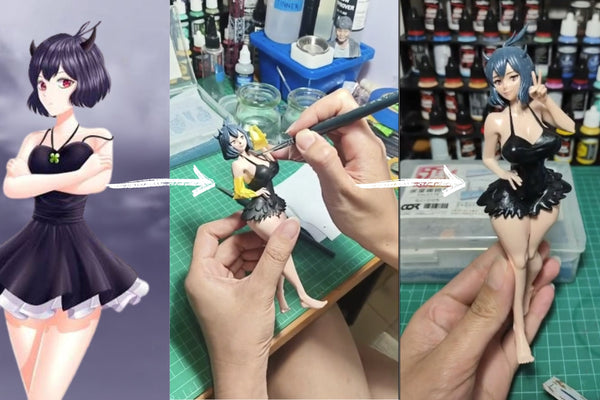
After printing and curing, finishing steps include support removal, surface sanding, priming, and optional hand painting. Figuro provides both realistic colored 3D printed finishes and hand-painted options for clients seeking elevated aesthetics. For Lego-like finishes, uniform colour application and matte or gloss sealing can replicate the appearance of injection-moulded bricks, while preserving the high-fidelity detail achievable with resin printing.
Mechanical Compatibility and Long-Term Performance
Long-term performance of 3D printed Lego parts depends on environmental exposure, mechanical load, and material ageing. Resin parts are sensitive to ultraviolet radiation and prolonged flexing; protective coatings and controlled display conditions mitigate deterioration. For functional play, designers should assess fatigue characteristics and may consider engineering alternatives for connectors intended for repeated assembly and disassembly.
Legal and Ethical Considerations
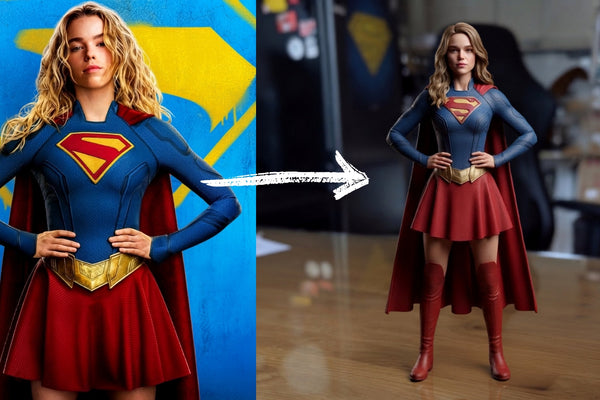
Producing parts that replicate proprietary designs or unique trademarks introduces intellectual property considerations. When creating Lego-compatible parts, creators must avoid infringing on registered trademarks or industrial designs. Custom figurines inspired by generic brick aesthetics, or bespoke character models derived from client-supplied photographs, present lower legal risk when original brand identifiers and protected minifigure likenesses are not reproduced. Figuro's custom services focus on bespoke figurines created from customer photos, with options for custom poses and outfits, which align with personalised and commemorative use rather than counterfeiting scenarios.
Applications and Use Cases
3D printed Lego-style objects and minifigures have broad applicability: prototype development, display collectibles, film and stop-motion production, custom gaming tokens, and commemorative keepsakes. Resin-based prints excel when visual fidelity and fine surface detail are paramount. For interactive toy applications where repeated mechanical engagement is expected, hybrid solutions combining resin detail elements with injection-moulded or CNC-machined connectors may offer the optimal balance.
Conclusion and Practical Recommendations
In summary, producing 3D printed Lego-compatible components is technically feasible with contemporary SLA/DLP equipment and premium resins, provided that designers account for tolerances, material properties, and appropriate finishing methods. For collectors, display artists, and production designers, resin printing offers unmatched detail at the expense of impact resistance. For high-wear functional parts, alternative materials or hybrid manufacturing strategies are advisable.
If you wish to explore custom, high-fidelity figurines or accessory design, Figuro provides premium resin printing, multiple finish options, and a model preview process with a 100% refund guarantee before print. Visit https://getfiguro.com to start a custom order or to obtain technical guidance on creating compatible parts.
Bring Your Best Memories into the 3D World
Tired of looking at your favorite moments through a glass screen? Turn those unforgettable photos into something you can actually touch, hold, and display forever. Whether you're chasing jaw-dropping realism with our Realistic 3D Figurines, adding a fun twist to your desk space with a Custom Bobblehead Figurine, or celebrating a milestone love story with a Personalized Anniversary Couple Gift, we custom-sculpt every single piece to tell your unique story.
👉 Explore Figuro's Full Collection & Start Crafting Yours Today!