


Introduction
This article examines the technical feasibility, workflow, material considerations, and safety implications of using a 3D printing machine to make toys. It is written in an analytical and practitioner-oriented manner for readers who wish to understand the engineering and production aspects rather than anecdotal experience. The term '3D printing machine' here encompasses common additive manufacturing technologies used by hobbyists and professionals, including fused deposition modeling (FDM), stereolithography (SLA), and digital light processing (DLP).
Overview of 3D Printing Technologies for Toys
SLA and DLP: High-fidelity resin printing
SLA and DLP processes cure photopolymer resin with a light source to produce parts with high surface fidelity and fine feature resolution. These methods are preferred for collectible figurines, miniatures, and detailed toy components because they routinely achieve layer heights of 25 to 100 microns and capture intricate textures and facial features. The primary trade-offs are material brittleness relative to thermoplastics and the requirement for post-processing steps such as washing and UV curing.
FDM: Robust and economical prototyping
FDM systems extrude thermoplastic filament to build parts layer by layer. Typical consumer-grade FDM printers offer layer heights between 100 and 300 microns. FDM is advantageous for structural toy parts, moving joints, and large-scale prototypes due to greater impact resistance and lower material cost. Limitations include visible layer lines, reduced fine-detail fidelity, and the need for careful print orientation and support removal to maintain dimensional accuracy.
Design Workflow to Make Toys with 3D Printing Machines
Model creation and scanning
Producing a toy begins with a 3D model, created by polygonal modeling software or obtained via 3D scanning and photogrammetry. High-end toy reproduction frequently relies on retopology and surface cleanup after scanning to ensure watertight geometry and controlled polygon density. Designers must consider joint clearances, tolerances for snap-fit assemblies, and the intended play profile when modeling parts.
File preparation and slicing
Once a watertight model is available, the file is prepared for printing using slicing software. Key parameters include layer height, infill density, print orientation, support generation, and exposure settings for resin printers. Orientation affects surface quality and mechanical strength; supports are necessary for overhangs but increase post-processing labor. For resin prints intended as toys, minimizing long unsupported cantilevers and optimizing part orientation for load-bearing directions enhances functional durability.
Materials, Finishes, and Size Considerations
Material selection
The choice of material determines aesthetic properties and functional performance. For display-focused collectible toys, premium photopolymer resin provides superior detail and a smooth surface suitable for painting. For functional components and durable toys, engineering thermoplastics such as ABS-like or Nylon filaments printed on FDM machines provide better impact resistance. Figuro utilizes premium resin for high-detail custom figurines, enabling sizes from 8cm to 22cm and fine feature retention.
Surface finishing and color
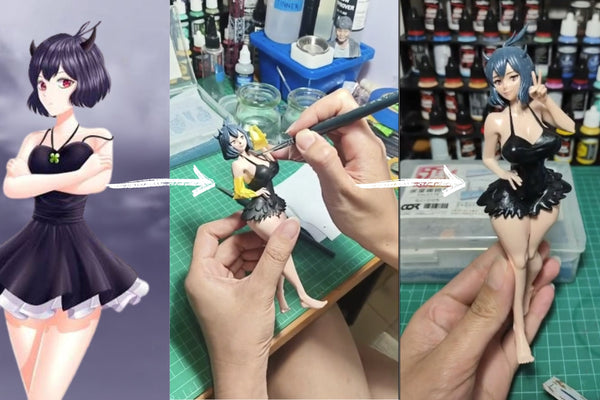
Post-processing steps include support removal, sanding, priming, painting, and clear-coating. Hand-painted finishes or realistic colored 3D printing can produce museum-quality surfaces. When the toy will be handled frequently, selecting durable paint systems and clear coats that bond well to the substrate is essential to prevent abrasion and flaking.
Manufacturing Considerations and Quality Control
Tolerances and repeatability
Dimensional tolerances depend on the printing technology, machine calibration, and material shrinkage. Resin printing typically has higher dimensional fidelity for fine features, while FDM may require compensatory design allowances for filament extrusion variability. Establishing a measurement protocol, using calipers to verify critical dimensions, and performing iterative test prints are standard quality-control practices.
Scaling from prototype to small-run production
3D printing is well-suited to short production runs and rapid iteration. To scale production, producers may employ parallelization of prints, nest multiple parts on build platforms, and standardize post-processing workflows. For higher throughput or parts requiring injection-molding level durability, 3D printing often remains valuable for tooling, masters, or limited-edition runs rather than high-volume manufacturing.
Safety, Regulatory, and Use-Case Guidance
Mechanical safety and age recommendations
Toys intended for children require attention to choking hazards, sharp edges, and joint security. Many 3D printed figurines are best classified as display collectibles rather than play toys for young children unless they are specifically engineered for play testing and compliance. Resin materials can be more brittle; therefore, components likely to be bitten, dropped, or flexed should use engineering thermoplastics or reinforced designs.
Material safety and chemical handling
Photopolymer resins contain reactive components and unpolymerized fractions that require appropriate personal protective equipment during handling. Washing, sanding, and post-curing should occur in ventilated spaces with dust control measures. Finished, fully-cured parts generally present limited chemical risk for handling, but final product specifications should include material safety information if intended for children.
Practical Examples and Use Cases
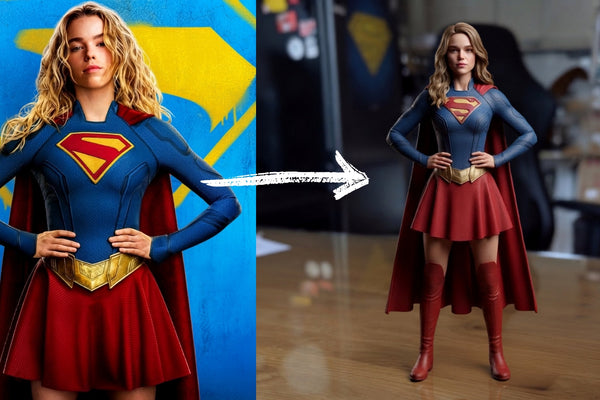
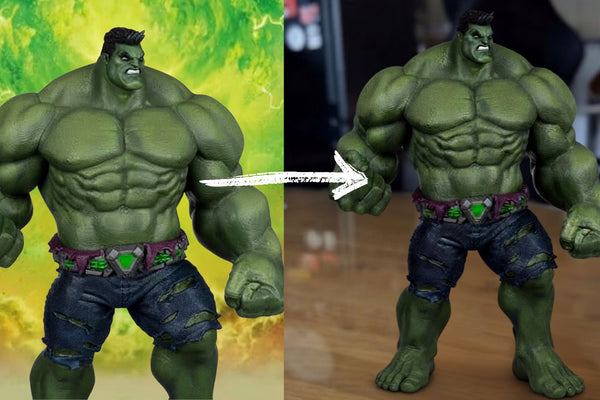
Enthusiasts and small businesses use 3D printing machines to make a range of toys: articulated action figures, collectible miniatures for tabletop gaming, custom bobbleheads, and vehicle miniatures. Technical priorities differ by use case. For collectible figures, surface fidelity and paintability are paramount; for functional toys, mechanical joints, snap-fit tolerances, and impact resistance are critical.
Why Choose a Professional Service for Custom 3D Printed Toys
Professional services combine optimized material selection, calibrated machines, experienced post-processing, and quality assurance protocols. Figuro, for instance, offers premium resin printing, hand-painted finish options, and custom poses that are specifically intended for high-fidelity figurines and collectibles. The service range includes multiple sizes from 8cm to 22cm and a satisfaction guarantee in which customers receive a preview; if the preview is not satisfactory, a 100% refund is provided before printing commences. Free shipping is available to several markets including the US, China, Thailand, Singapore, India, and Malaysia.
Conclusions and Recommendations
In summary, many people and small manufacturers have successfully used 3D printing machines to make toys, but the suitability of the method depends on the intended use case. SLA and DLP resin printing excel at producing detailed collectibles and display figures, while FDM provides durability for mechanical parts and toys designed for handling. Attention to design for additive manufacturing, material properties, post-processing, and safety requirements is essential to produce reliable, attractive products.
Call to Action
If you are interested in commissioning high-fidelity, 3D printed collectible toys or small-run figurines, consider evaluating a professional service that specializes in premium resin and refined finishes. Visit Figuro to review examples, request a custom preview, or start a custom order. Their process supports custom poses, realistic colored printing, hand-painted finishes, and a customer preview with a full refund policy if the preview is unsatisfactory.
Bring Your Best Memories into the 3D World
Tired of looking at your favorite moments through a glass screen? Turn those unforgettable photos into something you can actually touch, hold, and display forever. Whether you're chasing jaw-dropping realism with our Realistic 3D Figurines, adding a fun twist to your desk space with a Custom Bobblehead Figurine, or celebrating a milestone love story with a Personalized Anniversary Couple Gift, we custom-sculpt every single piece to tell your unique story.
👉 Explore Figuro's Full Collection & Start Crafting Yours Today!