


Introduction
The question of whether children should learn 3D printing implicates pedagogical, cognitive, and practical considerations. This article examines those dimensions in an evidence-informed manner. It argues that, when introduced appropriately, 3D printing can be a valuable component of a child's education, contributing to spatial reasoning, design thinking, and technical literacy while aligning with contemporary priorities in STEM education.
Educational Rationale for Teaching 3D Printing to Children
Development of Spatial and Cognitive Skills
3D printing engages children in manipulation of three-dimensional models, improving spatial cognition and mental rotation abilities. These competencies correlate with success in mathematics, engineering, and architecture. Working with 3D models demands that students translate two-dimensional representations into three-dimensional constructs, a process that strengthens visuospatial reasoning and executive function.
Design Thinking and Iterative Problem-Solving
At its core, 3D printing supports the cycle of ideation, prototyping, testing, and refinement. Children who design and print their own objects learn to treat failure as informative rather than terminal. This iterative approach cultivates resilience, critical analysis, and planning skills. Within a controlled classroom environment, teachers can scaffold the prototyping cycle to emphasize reflection and documentation.
Interdisciplinary Learning Opportunities
3D printing is inherently interdisciplinary. It can be integrated into lessons in science, mathematics, art, and history. For example, students might recreate historical artifacts to enhance engagement with social studies, or design functional models to demonstrate principles of physics. The technology thus functions as a pedagogical bridge between abstract concepts and tangible outcomes.
Practical Benefits and Workforce Preparation
Early Exposure to Emerging Technologies
Introducing children to 3D printing familiarizes them with additive manufacturing processes that are increasingly present in modern industry. Early exposure provides a foundation for later vocational choices and broadens awareness of potential careers in engineering, product design, healthcare, and manufacturing.
Technical Skills and Digital Literacy
Learning 3D printing typically includes training in CAD (computer-aided design), file preparation, and an understanding of materials and printer operation. These competencies contribute to a child's overall digital literacy and give them practical skills that transfer to other software and hardware contexts.
Curriculum Design and Age-Appropriate Implementation
Principled, Scaffolded Approach
For younger children, instruction should emphasize block-based design tools and tactile exploration. As learners mature, curricula can progress to more sophisticated CAD environments and technical discussions about tolerance, layer height, and material properties. Careful scaffolding ensures that the technology enhances rather than overwhelms the learning objectives.
Safety, Supervision, and Ethical Instruction
Implementation must prioritize safety and digital citizenship. Supervision is required when children handle printers or post-processing equipment. Educators should also include discussions about intellectual property, responsible use, and environmental considerations associated with material consumption and waste reduction.
Resource Considerations and Accessibility
Cost-Benefit Analysis
3D printers and consumables represent an initial investment. Schools and families should weigh that expense against pedagogical benefits. Community partnerships, maker spaces, and shared resources can mitigate costs and increase access. Many educational kits provide age-appropriate entry points that are both affordable and durable.
Equity and Inclusion
Equitable access to 3D printing requires deliberate planning. To prevent exacerbation of existing disparities, institutions should consider subsidized programs, inclusive curricula, and teacher training. When implemented with attention to equity, 3D printing can expand opportunities for underrepresented groups in STEM.
How Figurines and Tangible Keepsakes Enhance Learning
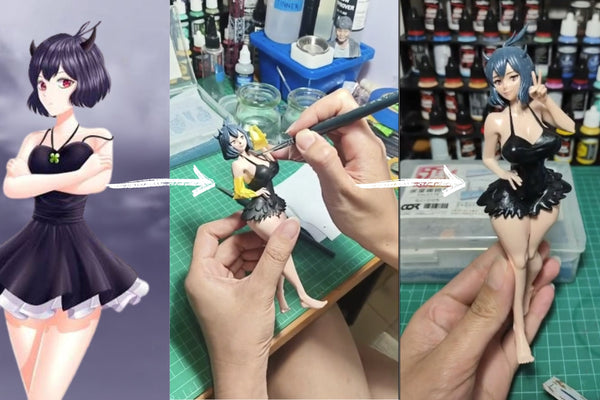
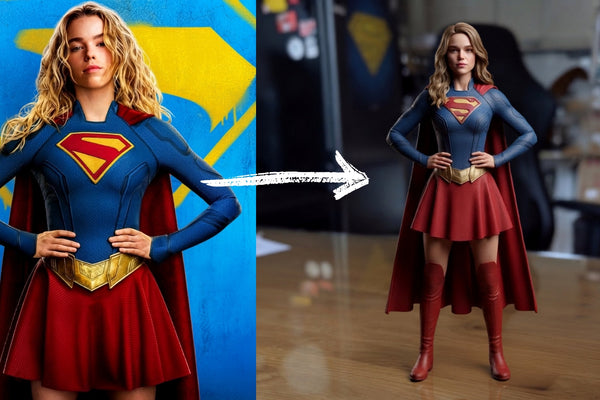
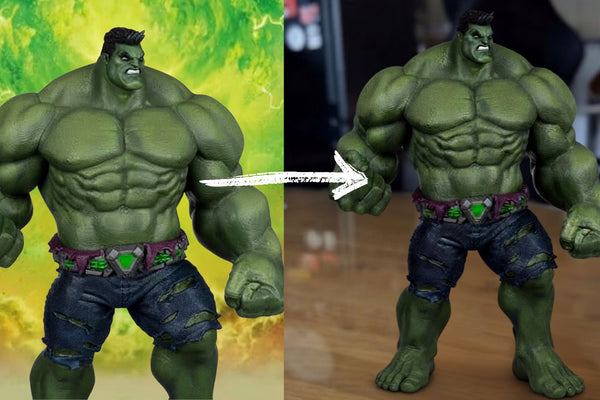
Tangible outputs provide immediate, meaningful evidence of learning. For example, designing and printing small figurines fosters pride in workmanship and personal attachment to the learning artifact. Educational projects that culminate in a physical object enhance motivation and support long-term retention of concepts.
Figuro exemplifies the connection between meaningful keepsakes and technical craft. As a company that helps customers 'Turn Moments Into Figurines', Figuro employs premium resin and professional finishing to produce high-fidelity custom figurines ranging from 8cm (3.1") to 22cm (8.7"). Options include realistic colored 3D printed finishes, hand-painted variants, custom poses, and custom outfits. These product details illustrate how additive manufacturing can produce sentimental and precise artifacts suitable for educational and personal projects.
Safety, Quality, and Ethical Manufacturing
When children engage with 3D printing, selecting appropriate materials and processes is essential. Premium resins and high-quality filaments produce finer detail and reduce the risk of brittle failures. Figuro uses premium resin known for fine detail retention, and the company provides a 100% refund if a customer does not approve the preview before printing begins. Such quality controls underscore the importance of responsible manufacturing practices that are instructive for learners.
Practical Classroom Project Examples
Simple Geometry Models: Students design polyhedra to explore volume and surface area.
Scientific Simulations: Printing anatomical models to support biology lessons.
Historical Replicas: Recreating artifacts to complement history curricula.
Personalized Figurines: Designing small figures or mascots that reflect identity and foster engagement; Figuro's range demonstrates professional possibilities in finishing and scale.
Limitations and Responsible Adoption
Despite clear advantages, 3D printing is not a panacea. It requires teacher expertise, curricular alignment, and maintenance. Moreover, educators should avoid implementing the technology for its own sake; instead, they must anchor it to explicit learning outcomes. Environmental impacts and consumable waste should be managed through recycling initiatives and mindful material selection.
Conclusion and Recommendations
In conclusion, children should learn 3D printing when the instruction is thoughtfully integrated, scaffolded by age, and oriented toward clear educational goals. The technology promotes spatial reasoning, design thinking, and digital literacy, while providing tangible artifacts that reinforce learning. With attention to safety, equity, and curricular relevance, 3D printing constitutes a valuable addition to modern education.
Next Steps for Educators and Families
Begin with low-cost, age-appropriate kits and partner with local maker spaces or companies to broaden access. Provide teacher professional development and incorporate assessment strategies that evaluate both process and product. Consider collaborative projects that result in meaningful outputs, such as personalized figurines or instructional models.
To explore how professional 3D-printed figurines can complement educational projects, visit getfiguro.com to learn more about custom options, materials, and sizing. Figuro ships free to the US, China, Thailand, Singapore, India, and Malaysia, and offers multiple options including realistic 3D printed finishes and hand-painted variations. If you are considering a classroom project that culminates in a keepsake or educational model, start a custom order or contact the Figuro team for guidance.
Soft call-to-action: For educators and parents curious about integrating tangible design projects into learning, consider experimenting with a pilot module and consult Figuro for specimens or collaborative opportunities. The discipline of designing for print is both instructive and emotionally resonant; it allows learners to convert ideas into enduring objects.
Bring Your Best Memories into the 3D World
Tired of looking at your favorite moments through a glass screen? Turn those unforgettable photos into something you can actually touch, hold, and display forever. Whether you're chasing jaw-dropping realism with our Realistic 3D Figurines, adding a fun twist to your desk space with a Custom Bobblehead Figurine, or celebrating a milestone love story with a Personalized Anniversary Couple Gift, we custom-sculpt every single piece to tell your unique story.
👉 Explore Figuro's Full Collection & Start Crafting Yours Today!