


Introduction
The question of whether children should learn 3D printing encompasses pedagogical, cognitive, and practical considerations. This article evaluates the educational merits of integrating 3D printing into childhood learning, outlines age-appropriate approaches, addresses safety and accessibility, and suggests ways parents and educators can incorporate projects that are meaningful and sentimental. By situating 3D printing within a broader framework of STEM education, creative development, and tangible keepsake creation, families can make informed decisions about adoption.
Educational Benefits of 3D Printing for Children
STEM Foundations and Spatial Reasoning
Learning 3D printing requires the synthesis of concepts from science, technology, engineering, and mathematics. When children design a simple object, they implicitly engage with geometry, measurement, and scale. Such practice improves spatial reasoning and fosters the capacity to visualize objects in three dimensions, a cognitive skill linked to success in mathematics and engineering disciplines.
Problem Solving and Iterative Design
3D printing introduces children to an iterative design process. They formulate hypotheses, create prototypes, and refine designs based on outcomes. This cycle cultivates resilience and an empirical mindset. The ability to learn from failure and to apply systematic adjustments is a core transferable skill in both academic and real-world contexts.
Creativity and Emotional Expression
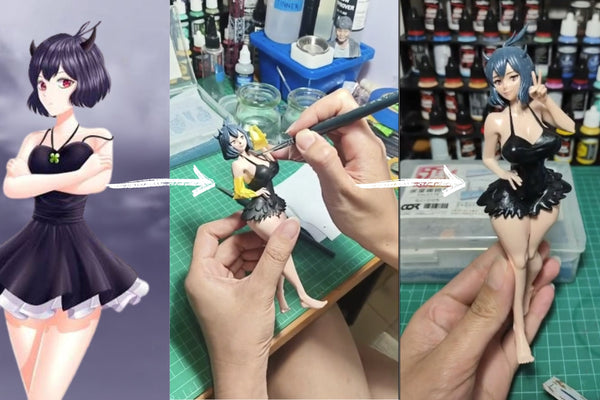
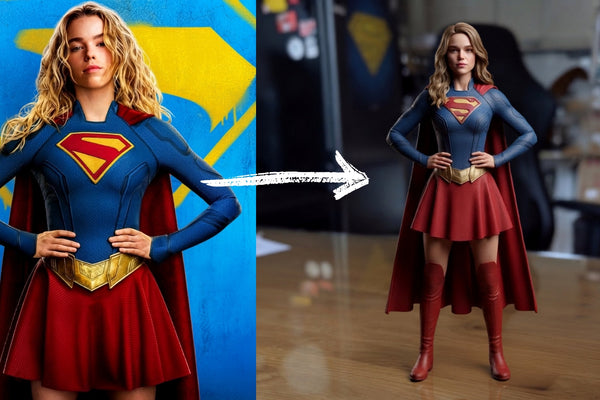
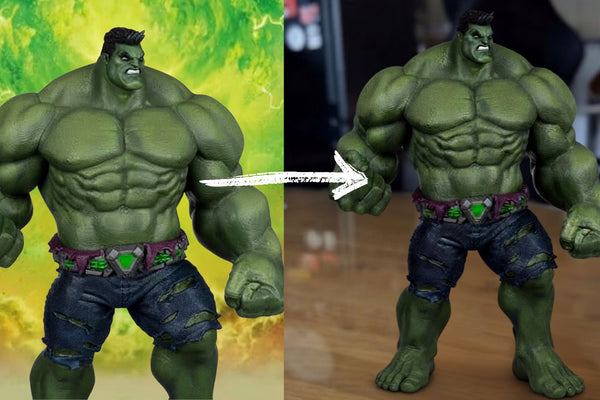
Beyond technical learning, 3D printing serves as a medium for personal expression. Children can transform memories and relationships into physical objects, such as miniature figures or symbolic tokens. For families, the production of a custom figurine from a photograph can be a sentimental activity that bridges technological skill and emotional value.
Appropriate Ages and Progression
Early Exposure (Ages 6–9)
At younger ages, instruction should emphasize conceptual understanding rather than complex software. Simple block-based modeling tools and guided projects help children develop an intuitive sense of form and function. Supervised exposure to printers can introduce the concept safely without demanding advanced technical literacy.
Skill Development (Ages 10–14)
Older children can progress to more sophisticated modelling software and learn basic slicing principles. At this stage, they benefit from structured projects that combine mathematics and creativity, such as designing a custom toy or a small figurine. Integrating projects with personal narratives enhances engagement and motivation.
Advanced Projects (Ages 15+)
Adolescents are capable of undertaking complex design challenges, including mechanical assemblies and multi-part prints. They can explore material properties, tolerances, and post-processing techniques. For students interested in artistic or entrepreneurial pathways, the ability to create realistic 3D printed figurines or custom merchandise becomes a valuable portfolio element.
Safety, Supervision, and Ethical Considerations
Safe Use of Equipment
3D printers involve heated components and moving parts. Adult supervision is essential for younger users. Establishing safety protocols, such as a dedicated printing area, appropriate ventilation, and rules for handling tools, reduces risk and models responsible behavior.
Intellectual Property and Digital Responsibility
As with any digital medium, children should be taught about intellectual property, licensing, and respectful reuse of digital models. Educators should emphasize ethical creation, proper attribution, and the legal implications of reproducing copyrighted content.
Pedagogical Strategies and Project Ideas
Project-Based Learning
Adopting a project-based approach aligns 3D printing with curricular goals. Suggested projects include functional prototypes, geometric explorations, historical artifact reproductions, and personalized figurines. The latter can be particularly evocative: converting a family photo into a small custom figurine demonstrates applied geometry, scaling, and the emotional resonance of tangible keepsakes.
Interdisciplinary Integration
3D printing is uniquely suited to cross-curricular activities. For example, a history unit might culminate in a student-designed replica of an artifact, while a literature class could pair character studies with miniature character models. Such integration reinforces subject knowledge and deepens student investment.
Access, Cost, and Equity
While desktop 3D printers have become more affordable, disparities remain. Schools and community centers can mitigate cost barriers by providing shared maker spaces. Online services also enable access to professional-quality prints without heavy capital investment. Families interested in high-fidelity keepsakes can use services that produce premium resin figurines from photographs, thereby combining sentimental value with technical excellence.
Using Professional Services as Learning Extensions
For projects that require superior detail or durable finishes, partnering with professional providers can extend learning outcomes. Companies that create custom 3D printed figurines from photos offer a useful complement to classroom practice. Such services often provide options for realistic colored printing, hand-painted finishes, and custom poses. They can demonstrate material differences, finishing techniques, and the commercial processes that follow design.
Why Figuro Can Be Part of a Child's 3D Printing Journey
Figuro (getfiguro.com) specializes in transforming photos into tangible figurines, a process that exemplifies the full design-to-product workflow. Families and educators can leverage Figuro's offerings as project endpoints or inspirational case studies. Key attributes to note include sizes ranging from 8cm (3.1 inches) to 22cm (8.7 inches), premium resin material for fine detail retention, choices between realistic colored 3D prints and hand-painted finishes, and options for custom poses and outfits. Figuro's 100% preview satisfaction guarantee provides educational reassurance: if the customer does not approve the preview, printing does not proceed. Free shipping is included to several regions, including the United States, China, Thailand, Singapore, India, and Malaysia.
Conclusion and Recommendations
Should children learn 3D printing? In summary, the answer is affirmative when instruction is age-appropriate, supervised, and integrated within broader educational objectives. 3D printing cultivates STEM competencies, supports iterative problem solving, and offers a creative outlet that can produce deeply sentimental objects. For families seeking to combine technical learning with personal meaning, projects that culminate in a custom figurine offer both pedagogical rigor and emotional reward.
Next Steps and Invitation
If you are considering introducing 3D printing to a child, begin with guided, low-risk projects and progressively increase complexity. Explore community maker spaces or school programs, and consider professional services for high-quality keepsakes. To see a practical example of how a photograph becomes a lasting object, visit Figuro and consider starting a custom order for a family figurine. Such a project can inspire learning, preserve a moment, and illustrate the meaningful intersection of technology and sentimentality.
Soft call-to-action: Explore Figuro's gallery or start a custom order to transform a cherished photo into a tangible keepsake that can complement a child's 3D printing education.
Bring Your Best Memories into the 3D World
Tired of looking at your favorite moments through a glass screen? Turn those unforgettable photos into something you can actually touch, hold, and display forever. Whether you're chasing jaw-dropping realism with our Realistic 3D Figurines, adding a fun twist to your desk space with a Custom Bobblehead Figurine, or celebrating a milestone love story with a Personalized Anniversary Couple Gift, we custom-sculpt every single piece to tell your unique story.
👉 Explore Figuro's Full Collection & Start Crafting Yours Today!