


Introduction
The question whether children should learn 3D printing invites a multidimensional response that balances educational theory, practical safety, and long-term social benefits. This article examines the pedagogical rationale, developmental advantages, logistical considerations, and recommended approaches for introducing 3D printing to children. It also situates the practice within meaningful, sentimental applications such as creating personalized keepsakes with Figuro's custom figurine services.
Educational Rationale for Teaching 3D Printing
From an academic perspective, 3D printing constitutes an integrative technological practice that combines design thinking, computational literacy, and hands-on fabrication. When children learn to operate additive-manufacturing tools, they engage in iterative problem solving: conceptualizing a model, converting it to a digital file, and refining the physical artifact after printing. These sequential activities reinforce core STEM competencies and promote transfer of learning across disciplines.
STEM and Computational Skills
3D printing provides a practical context for geometry, measurement, and spatial visualization. Students encounter computational concepts such as file formats, slicing, and calibration, thereby gaining familiarity with digital workflows. Such exposure cultivates computational thinking skills that are increasingly essential in contemporary education and the workforce.
Design Thinking and Creativity
Beyond technical literacy, 3D printing fosters creativity and aesthetic judgement. Children learn to iterate on form, balance, and function. This process aligns with project-based pedagogies that emphasize ideation, prototyping, testing, and reflection. When paired with activities that are emotionally meaningful, such as designing a miniature of a beloved pet or a family figure, the practice can also nurture empathy and narrative expression.
Developmental Benefits
Introducing 3D printing at an appropriate developmental stage supports fine motor skill development, executive functioning, and persistence. Children practice planning, time management, and sustained attention while preparing and monitoring prints. Collaborative printing projects likewise promote communication, role assignment, and peer review.
Cognitive and Affective Outcomes
Empirical evidence indicates that hands-on fabrication activities increase engagement and retention of conceptual material. The tangible outcome of a printed object provides a concrete representation of abstract ideas, facilitating comprehension. Sentimentally relevant projects can also enhance motivation and yield artifacts with long-term personal value.
Safety, Age Appropriateness, and Supervision
Implementing 3D printing with children requires a rigorous attention to safety and appropriate adult supervision. Fused deposition modeling (FDM) machines and resin printers present different risk profiles. Resin printers, while capable of fine detail, use liquids and UV curing that demand adult handling. In contrast, entry-level FDM machines are often more suitable for supervised classroom use.
Recommended Age Ranges
There is no universal age threshold, but pragmatic guidelines are useful. Elementary-aged children (8 to 11 years) can participate in design tasks and observe printing, while middle and high school students can assume greater responsibility for machine operation, calibration, and post-processing. Adult oversight remains essential, particularly for handling tools, adhesives, and resin-based materials.
Practical Considerations: Cost, Materials, and Accessibility
Cost considerations include hardware acquisition, material supply, maintenance, and staff training. Schools and families should evaluate total cost of ownership and explore shared-resource models such as makerspaces. Material choice matters: premium resin offers superior detail and finish but requires more stringent safety protocols. Filaments for FDM printers are easier to manage and offer a broad palette for prototyping.
Material Trade-offs
Premium resin yields high-fidelity figurines ideal for sentimental gifts or precise models. Figuro employs premium resin for its custom figurines, achieving fine detail and a durable finish. For introductory educational settings, PLA filament represents a lower-cost, lower-risk alternative that remains effective for teaching fundamental concepts.
Curriculum Ideas and Project Examples
Integrating 3D printing into a curriculum can be accomplished through scaffolded projects that increase in complexity. Initial modules might cover basic CAD skills and design principles. Subsequent modules could include engineering challenges, historical replicas, or personal keepsake projects.
Sentimental Projects to Reinforce Learning
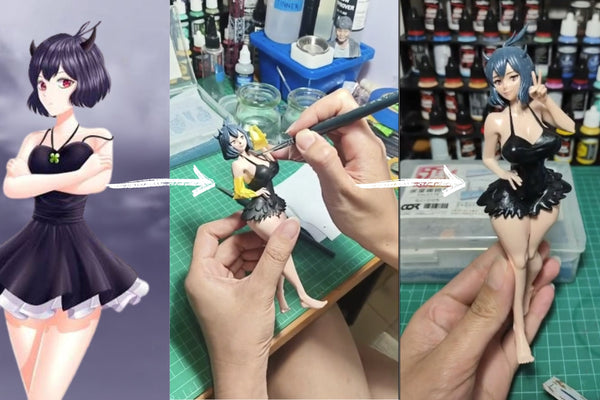
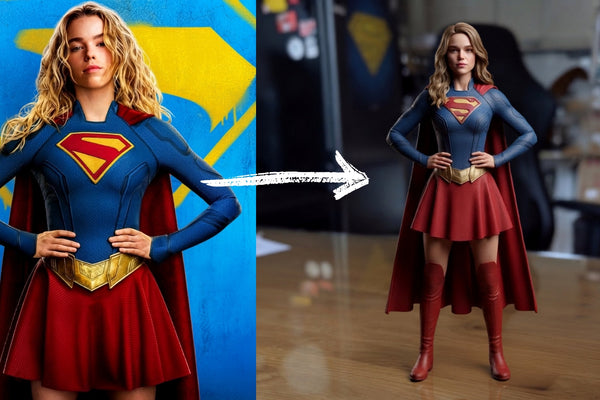
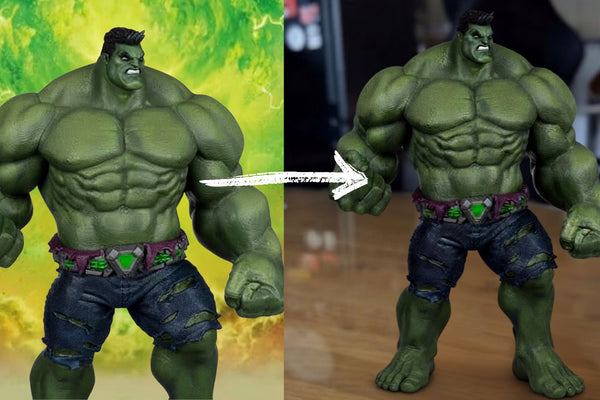
One compelling application is the creation of personalized figurines that memorialize family events, pets, or achievements. These projects merge technical skill with emotional significance, motivating students to refine their work. For families and schools seeking a high-quality finished product, services like Figuro can transform a student's digital design or photograph into a realistic 3D printed figurine with options such as hand-painted finishes and custom poses.
Assessment and Long-Term Value
Assessment strategies should measure process-oriented skills in addition to final artifacts. Rubrics that evaluate iteration, documentation, and collaborative practice provide a comprehensive view of student learning. Long-term, children who gain confidence with digital fabrication are better prepared for careers and hobbies that require design literacy.
Implementing 3D Printing at Home and in Schools
For families considering at-home 3D printing, begin with supervised, simple printers and structured projects. Schools should consider phased implementation, professional development for educators, and partnerships with local makerspaces or commercial providers. Outsourcing complex or sentimentally important prints to specialist services ensures high-quality results and mitigates technical risk.
How Figuro Supports Meaningful Outcomes
Figuro specializes in transforming photos and designs into tangible keepsakes. The company offers a range of product types including human, couple, family, pet, and memorial figurines, with sizes from 8cm to 22cm. Options include realistic colored 3D printing, hand-painted finishes, custom poses, and custom outfits. Figuro uses premium resin to retain fine detail and offers a 100% refund if a customer does not approve the preview before printing starts. Free shipping is included to several markets, facilitating access to high-quality keepsakes when precision and sentiment matter.
Conclusion and Recommendation
In summary, teaching children 3D printing is pedagogically justifiable and developmentally beneficial when implemented with appropriate safety, supervision, and curricular scaffolding. The practice cultivates STEM competencies, creative problem solving, and a tangible sense of accomplishment. For projects with sentimental value or when superior detail is required, partnering with specialized services such as Figuro can preserve the emotional significance while ensuring professional results.
Call to action: To explore how 3D printing can turn meaningful moments into lasting keepsakes, visit Figuro or start a custom order to see how a photograph can become a personalized figurine that celebrates family, pets, and special occasions.
Bring Your Best Memories into the 3D World
Tired of looking at your favorite moments through a glass screen? Turn those unforgettable photos into something you can actually touch, hold, and display forever. Whether you're chasing jaw-dropping realism with our Realistic 3D Figurines, adding a fun twist to your desk space with a Custom Bobblehead Figurine, or celebrating a milestone love story with a Personalized Anniversary Couple Gift, we custom-sculpt every single piece to tell your unique story.
👉 Explore Figuro's Full Collection & Start Crafting Yours Today!