


Introduction
The decision to buy 3d models requires technical discernment and an appreciation of downstream manufacturing constraints when the intent is physical fabrication. This article provides an academically rigorous overview of the considerations that inform procurement, evaluation, and utilization of 3D models for both digital projects and additive manufacturing. It is written for designers, engineers, hobbyists, and procurement specialists who seek reliable guidance on acquiring assets that are fit for purpose.
Types of 3D Models and Their Applications
Digital assets versus 3D printable models
3D models can be broadly categorised into two classes: digital assets designed primarily for visualization, animation, or games, and engineering-oriented models calibrated for fabrication. Visualization assets often prioritise texture detail and normal mapping while permitting high polygon counts. In contrast, 3D printable models must satisfy geometric constraints such as manifold topology, minimum wall thickness, and structural integrity under load. When one intends to buy 3d models for physical production, the latter category is the appropriate selection.
Specialised product types and industry examples
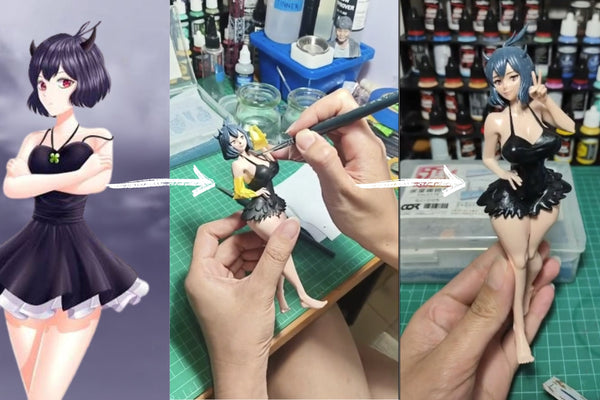
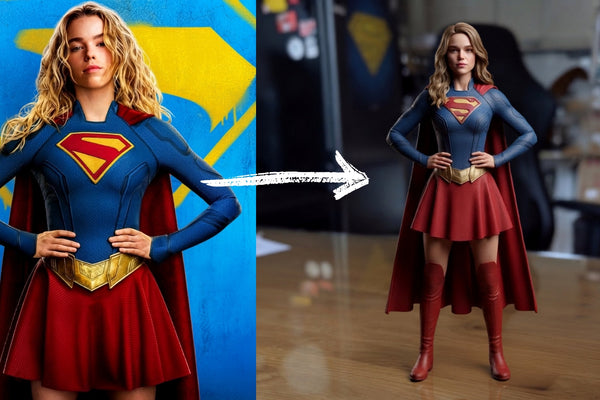
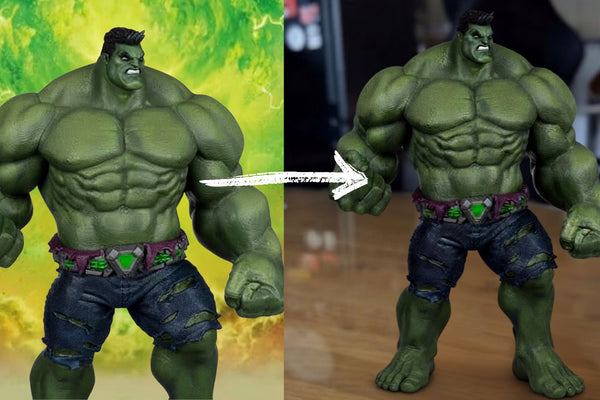
Specific model categories include mechanical parts, cosplay components, architectural elements, and figurines. Enthusiast markets include miniatures for tabletop games and bespoke figurines derived from photographic references. Services such as Figuro specialise in transforming photographic input into high-fidelity custom 3D printed figurines, providing options for realistic colour 3D prints and hand-painted finishes on premium resin. Understanding the intended use case enables selection of the correct model type at acquisition.
File Formats and Compatibility
File format is a primary compatibility constraint. Common exchange formats include STL, OBJ, FBX, GLTF, and 3MF. STL is ubiquitous for additive manufacturing but lacks native support for materials or texture maps. OBJ supports geometry plus texture coordinates and external material definitions. GLTF is increasingly used for web and real-time applications because it encapsulates geometry, materials, and textures in a lightweight container. When you buy 3d models intended for printing at a service provider, confirm which format is preferred; many printing pipelines accept STL or 3MF.
Technical Considerations When Purchasing 3D Models
Topology, manifoldness, and polygon count
Effective physical production demands manifold meshes with consistent face orientation. Non-manifold edges and inverted normals commonly cause slicing failures. Polygon count must be balanced: excessive density increases file size and processing time, whereas insufficient detail degrades surface fidelity. For resin-based printing, fine detail retention is possible at modest polygon counts if the topology is clean and the mesh is watertight.
Scale, units, and dimensional verification
Confirm units and scale before fabrication. Models are often authored in millimetres, centimetres, or metres; misinterpretation leads to incorrectly sized outputs. Use bounding box verification procedures or import previews to validate scale. When ordering custom figurines, note available sizes such as 8cm to 22cm, and ensure the model's proportions match the chosen final dimensions.
Textures, UV mapping, and colour data
For coloured prints or texture-driven renders, verify that UV maps and texture files are provided and that resolution is adequate. Some printing technologies use vertex colour or full-color texture mapping; others require painted post-processing. If the model will be hand-painted, ensure surface topology supports paint adhesion and that geometric seams are minimised.
Licensing, rights, and permitted usage
Licensing governs permitted uses and redistribution. When you buy 3d models from marketplaces, review whether the licence permits commercial use or derivative works. Custom services that produce bespoke figurines from personal photographs typically transfer only the physical object to the purchaser while retaining intellectual property of the underlying processing pipeline. Always verify licence terms prior to commercial deployment.
Preparing Models for Physical Printing
Design modifications for manufacturability
Physical printing imposes constraints that require pre-print modifications. Implement minimum wall thicknesses consistent with the chosen material; for premium resin used in high-detail figurine production, minimum effective thickness is often in the range of 0.8 to 1.5 millimetres depending on geometry. Hollowing large volumes reduces material consumption and decreases the risk of internal stresses during curing. Provide drain and vent holes where necessary to avoid pressure differentials.
Support structures, orientation, and print optimization
Correct orientation reduces visible layer lines and supports usage. Determine support placement strategically to minimise post-processing and preserve critical details. In resin printing, support marks can be meticulously removed and sanded, but optimal orientation still improves surface finish and reduces manual labour.
Where to Buy 3D Models: Marketplaces and Bespoke Services
There are three primary procurement channels: general marketplaces (for example, those that host thousands of assets), specialised model shops offering vetted engineering components, and bespoke service providers that create custom figurines from photographic input. Marketplaces often provide user reviews, model previews, and format filters. Bespoke providers such as Figuro convert photos into premium resin figurines with options for realistic colour 3D printing and hand-painted finishes. Figuro also supports multiple sizes, custom poses and outfits, and guarantees a 100% refund if the customer rejects the preview prior to printing.
Ordering Custom 3D Printed Figurines: Best Practices
When ordering from a custom provider, follow these best practices: submit high-resolution reference images with consistent lighting, specify desired final size and pose, and request a digital preview to validate likeness and posture. Confirm material selection; Figuro uses premium resin with fine detail retention and offers sizes ranging from 8cm to 22cm. Clarify shipping terms and turnaround time; note that Figuro includes free delivery to select regions including the US, China, Thailand, Singapore, India, and Malaysia.
Quality Assurance and Post-Delivery Care
Quality assurance procedures should include a digital preview checkpoint and a physical inspection upon delivery. For painted finishes, evaluate colour fidelity, paint adhesion, and surface uniformity. If refinements are necessary, inquire about the provider's remediation policy; Figuro provides a preview approval and a satisfaction guarantee prior to printing which mitigates the risk of unsatisfactory final output.
Conclusion and Recommended Next Steps
To buy 3d models effectively requires alignment between the model's technical characteristics and the intended manufacturing process. Verify file formats, topology integrity, scale, and licensing prior to procurement. For users seeking physical manifestation of personal moments, custom solutions that bridge photographic input and premium resin fabrication offer a robust pathway. Figuro provides a clear workflow for converting photographs into detailed 3D printed figurines with multiple size options, material clarity, and a preview guarantee.
Call to action: If you are ready to convert a photographic moment into a tangible keepsake, consider visiting Figuro to start a custom order or to review specification guidelines for purchasing compatible 3D models.
Bring Your Best Memories into the 3D World
Tired of looking at your favorite moments through a glass screen? Turn those unforgettable photos into something you can actually touch, hold, and display forever. Whether you're chasing jaw-dropping realism with our Realistic 3D Figurines, adding a fun twist to your desk space with a Custom Bobblehead Figurine, or celebrating a milestone love story with a Personalized Anniversary Couple Gift, we custom-sculpt every single piece to tell your unique story.
👉 Explore Figuro's Full Collection & Start Crafting Yours Today!