


Introduction
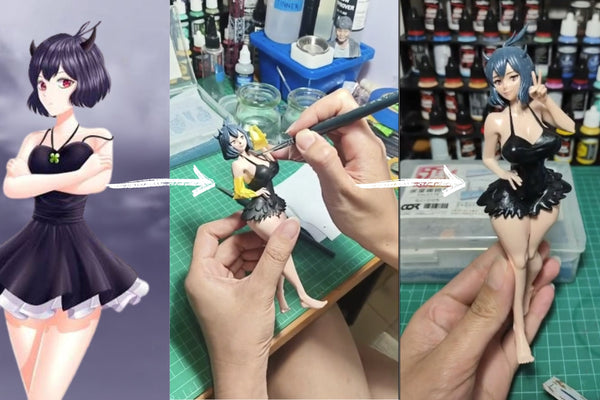
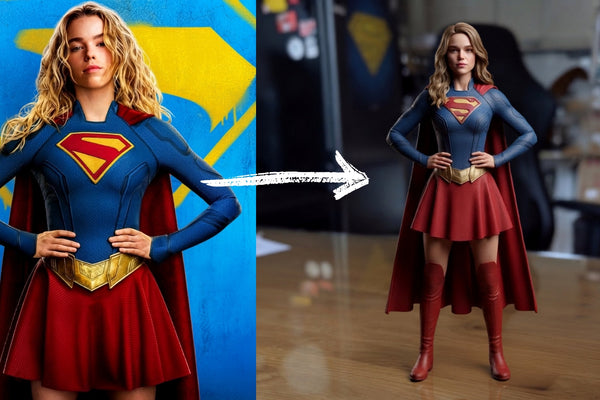
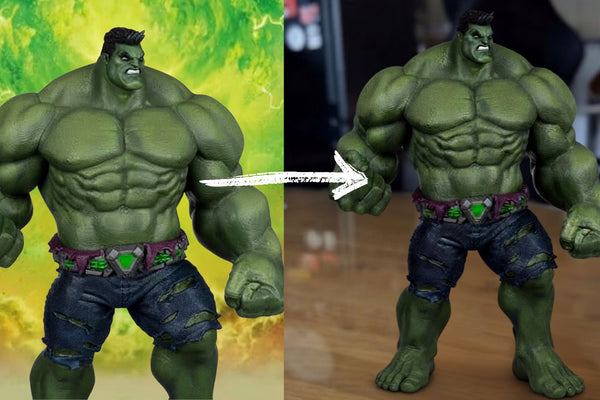
This technical guide addresses the preparation, optimization, and production of an action figure STL for high-resolution 3D printing. It is intended for modelers, hobbyists, and production engineers who require precise procedural knowledge to convert a digital mesh into a physically robust, detailed figurine. The discussion emphasizes mesh integrity, dimensional accuracy, and process parameters relevant to premium resin printing workflows.
STL File Fundamentals
File Structure and Mesh Integrity
The STL format encodes surface geometry as a triangular mesh. For successful fabrication, the mesh must be watertight and free of non-manifold edges. Typical defects include inverted normals, duplicated vertices, intersecting geometry, and open boundaries. Prior to slicing, the model should undergo automated and manual validation using mesh-repair utilities or professional modelling software. Repair steps commonly include reorienting normals, welding coincident vertices, and filling holes to ensure a single contiguous shell.
Resolution and Polygon Count
Polygon density influences both surface fidelity and file size. Excessive triangle counts may impede slicing and increase compute time, while insufficient resolution obscures fine facial features and costume details. Apply targeted decimation that preserves curvature in critical zones, such as facial planes, hands, and emblems. Maintain a balance by preserving local curvature while reducing flat-area tessellation.
Preparing an Action Figure STL for Printing
Scaling and Unit Consistency
Confirm unit conventions at the outset; mismatched units are a frequent source of scaling errors. When preparing an action figure STL intended for Figuro production, adhere to the available size range of 8cm to 22cm to anticipate cost and support strategies. Use precise measurement tools to verify heights, joint clearances, and accessory proportions in millimetres to avoid unintended rescaling during slicing.
Hollowing and Wall Thickness
Hollowing reduces material use and mitigates internal stresses during post-cure. When hollowing, create uniform internal cavities and include drain and vent holes sized for resin evacuation and post-processing. Specify a minimum wall thickness that satisfies both structural demands and printing constraints; for premium photopolymer resin, a conservative minimum wall thickness of approximately 1.2 to 2 mm for load-bearing areas is recommended, with thinner sections permitted for ornamental details after engineering judgement.
Support Strategy and Orientation
Proper orientation reduces the need for intrusive supports on high-detail surfaces. Orient the model to protect facial regions and sculpted details from support contact. Design support attachment points on non-critical surfaces and use conical or tree supports for resin processes to minimize removal damage. Consider overhang angles and bridging spans; reorient iteratively in the slicer to identify an optimal compromise between support volume and surface quality.
Articulation and Tolerances
If the action figure contains movable joints, establish tolerances based on intended joint type. Tolerances must account for post-cure shrinkage, sanded clearance, and paint thickness. For press-fit pegs and sockets, initial clearances of 0.2 to 0.4 mm are typical, but empirical testing on pilot prints is essential. For multi-part assemblies, provide alignment features and keyed interfaces to facilitate repeatable assembly while preserving aesthetic continuity.
Material Considerations and Printing Technology
Action figures demand both surface fidelity and mechanical resilience. Photopolymer resins used in SLA and DLP processes deliver exceptional detail and fine layer resolution, making them suitable for small-scale figurines. Figuro utilises premium resin that retains fine detail while offering appropriate post-cure strength. Choose layer heights between 25 and 50 microns for optimal detail versus throughput, and plan post-curing cycles to stabilize mechanical properties.
Post-Processing and Finishing
Post-processing comprises support removal, surface refinement, priming, and painting. Use micro-abrasion and fine-grit sanding to eliminate support artifacts and layer lines. Apply a multi-stage priming system to create a uniform surface prior to painting. If a hand-painted finish is desired, verify adhesion compatibility between primer, paints, and final sealant. Figuro provides options for both realistic colored 3D printed surfaces and hand-painted finishes, accommodating varying aesthetic requirements.
Optimizing for Commercial Production at Figuro
When preparing an action figure STL for commercial manufacture with Figuro, adhere to established submission protocols. Figuro accepts custom models and provides a digital preview before print initiation, together with a 100% refund guarantee if the preview is unsatisfactory. Size options range from 8 cm to 22 cm, enabling scaled reproductions while maintaining proportional detail. Additional customization includes bespoke poses, outfits, and accessory integration. Shipping logistics are absorbed by Figuro for key markets, with free delivery to the US, China, Thailand, Singapore, India, and Malaysia.
Legal and Intellectual Property Considerations
Modelers and clients must observe copyright and licensing constraints when producing action figure STLs that depict third-party characters. Commercial reproduction of trademarked or copyrighted characters frequently requires explicit licensing. When in doubt, consult legal counsel or negotiate licensing agreements prior to production to mitigate infringement risk.
Common Issues and Troubleshooting
Typical production failures include layer delamination, excessive support scarring, and unintended warpage. Diagnose layer failures by examining interlayer adhesion and post-cure parameters. Adjust exposure, layer lift speeds, and support density to reduce scarring. Employ controlled thermal and UV post-cure schedules to minimize internal stresses and dimensional drift.
Conclusion and Call to Action
Preparing an action figure STL for high-detail resin printing requires disciplined mesh validation, appropriate scaling, considered support strategy, and material-aware post-processing. Figuro integrates these technical competencies into a streamlined production workflow, offering premium resin materials, size flexibility from 8 cm to 22 cm, and finishing options that include realistic colored prints and hand-painted detail. For practitioners seeking a reliable production partner, consider submitting an STL or commissioning a custom model. Visit Figuro to explore services or initiate a custom order and benefit from an expert preview and satisfaction guarantee.
Bring Your Best Memories into the 3D World
Tired of looking at your favorite moments through a glass screen? Turn those unforgettable photos into something you can actually touch, hold, and display forever. Whether you're chasing jaw-dropping realism with our Realistic 3D Figurines, adding a fun twist to your desk space with a Custom Bobblehead Figurine, or celebrating a milestone love story with a Personalized Anniversary Couple Gift, we custom-sculpt every single piece to tell your unique story.
👉 Explore Figuro's Full Collection & Start Crafting Yours Today!