


Action Figure 3D Model Free: Technical Guide for Enthusiasts
This article provides an academic and practical overview of locating, preparing, and producing free 3D models of action figures for high-fidelity 3D printing. It addresses file formats, mesh repair, scaling, and finishing considerations, and explains how commercial services such as Figuro can integrate with open-source models to produce premium resin figurines.
Overview of Free 3D Models for Action Figures
Free 3D models of action figures are distributed across repositories, community forums, and maker platforms. These models range from low-resolution meshes intended for visualisation to print-ready STL files suitable for resin printing. Understanding the provenance and intended use of a model is essential for successful production.
Common Sources
Repositories that frequently host free models include Thingiverse, MyMiniFactory (free section), Cults3D (free category), and GitHub repositories maintained by hobbyist sculptors. Enthusiast forums and Discord communities also share scans and personal sculpts under various licences. When searching, use keywords such as 'action figure 3d model free', 'STL action figure', and 'printable action figure model'.
File Formats and Technical Requirements
Action figure models commonly use the following file formats:
- STL — Widely adopted for 3D printing; stores surface geometry without colour or texture data.
- OBJ — Supports geometry plus UV mapping and associated MTL files for material definitions.
- PLY — Often used for scanned data; preserves vertex attributes.
For printability, the model must have a watertight mesh, consistent normals, and no non-manifold edges. Software such as MeshLab, Blender, and Microsoft 3D Builder can inspect and visualise these attributes prior to repair.
Resolution and Detail
Detail density must be balanced with printer capabilities. For SLA/DLP resin printing, aim for models with micro-detail preserved in the mesh; but remove unnecessarily high polygon counts that increase slicing time without perceptible benefits. Decimation tools in Blender or Meshlab can reduce polygon counts while preserving silhouette and facial features.
Mesh Repair and Optimization
Mesh repair is the essential step between download and print. Typical operations include:
- Hole filling to ensure watertightness.
- Normal recalculation to correct inward-facing faces.
- Non-manifold edge removal to avoid slicing errors.
- Retopology for problematic scans where triangle distribution is uneven.
Automated repair tools such as Netfabb and the Mesh Repair modifier in Blender can resolve common issues. For more complex repairs, manual intervention by a modeller is advised.
Scaling, Supports, and Print Orientation
When preparing an action figure 3D model free download for printing, consider the intended final size. Typical collectible scales for figurines range from 8cm (3.1") to 22cm (8.7"), which is aligned with standard offerings from professional services. Scaling affects feature legibility and structural integrity. Thin elements such as fingers and weaponry may require thickening or internal armature to survive post-print handling.
Orientation and support placement are critical. Orient models to minimise overhangs across delicate facial features and to ensure stable base adhesion. Resin printers prefer a slightly tilted orientation to reduce suction forces; FDM prints require carefully placed supports to avoid surface artefacts on visible faces.
Slice Settings
Slice settings should align with material and printer resolution. For SLA printing, layer heights between 25–50 microns yield high fidelity. Use appropriate exposure settings for the chosen resin and validate with test prints. For FDM, opt for smaller nozzle diameters and fine layer heights for better surface smoothness, though some post-processing will likely be required.
Material Selection and Finishing
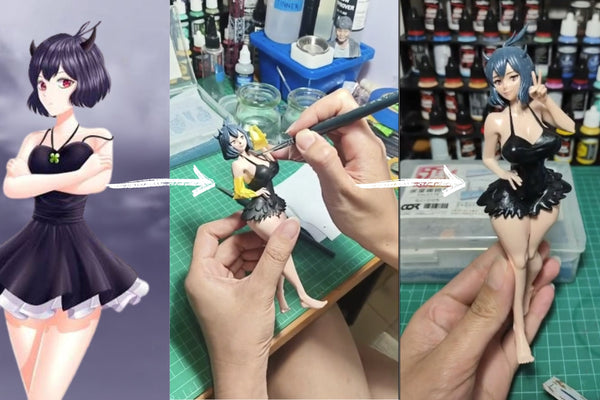
Resin materials excel at preserving intricate detail and are therefore preferred for action figure reproduction. Premium resin retains fine sculptural features and accepts post-processing such as sanding and painting. Figuro uses premium resin with fine detail retention, and offers realistic colored 3D printed and hand-painted finish options for a tailored aesthetic.
Finishing workflows include IPA washing, UV curing, light sanding, priming, and painting. For professional quality, multi-stage priming and fine-grit sanding reduce layer lines. If the model will be custom-painted, ensure that the surface is chemically compatible with chosen primers and paints.
Legal, Licensing, and Copyright Considerations
Many free models are distributed under licences that restrict commercial use or derivative works. Before using a free action figure 3D model for production or sale, verify the licence type. Public domain and permissive licences such as CC0 allow unfettered use; other licences may require attribution or forbid commercial distribution.
When a model depicts a copyrighted character, additional rights may be necessary for commercial replication. For private, non-commercial use, personal printing is typically tolerated but still subject to local law and the model's licence.
Integrating Free Models with Professional Services
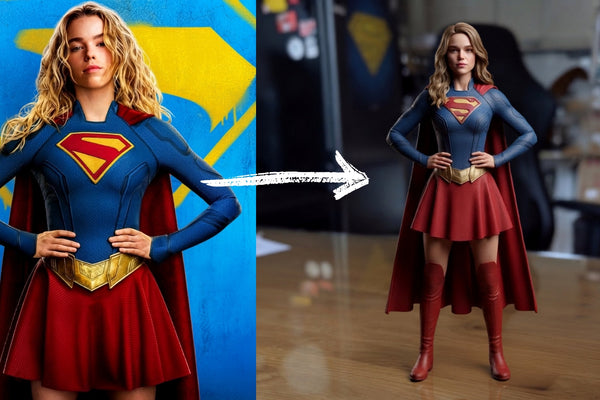
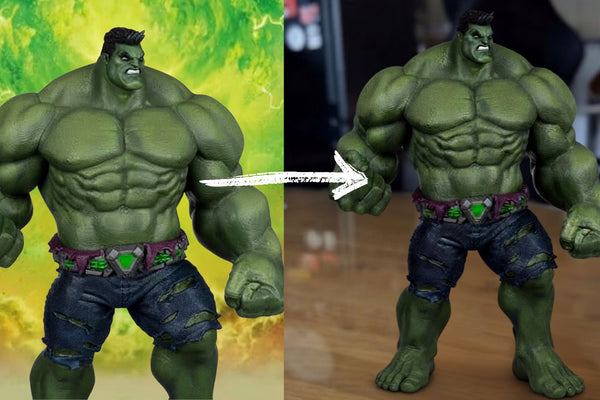
Enthusiasts often combine free models with professional finishing to achieve collectible-grade results. Figuro provides a workflow that accepts user-supplied models and customises them for production: options include realistic colored 3D printing, hand-painted finishes, custom poses, and custom outfits. Figuro's size range (8cm to 22cm) accommodates most collector preferences, and premium resin material ensures high fidelity.
Notably, Figuro offers a 100% refund if the customer does not approve the preview before printing begins, which mitigates the risk when commissioning a finished product from a free source model. Free shipping is available to several regions, including the US, China, Thailand, Singapore, India, and Malaysia, making professional finishing accessible to a global audience.
Practical Workflow Example
1. Locate a free model with permissible licence from a trusted repository.
2. Inspect the mesh in Blender or MeshLab for non-manifold edges and holes.
3. Repair and decimate the mesh, preserving essential details.
4. Scale the model to desired final dimensions; validate thin features and add internal supports or armature where necessary.
5. Slice with settings appropriate to resin or FDM workflow; print a small test piece to verify detail and fit.
6. Finish by washing, curing, sanding, and painting, or submit the model to a professional service such as Figuro for premium resin production and finishing.
Conclusion and Call to Action
Free 3D models for action figures provide a cost-effective starting point for hobbyists and collectors. A rigorous, methodical approach to file validation, mesh repair, scaling, and material selection will produce reliable, high-fidelity results. For those who prefer a professional outcome, Figuro offers an integrated service using premium resin, multiple finish options, and a customer assurance policy that includes a 100% refund if previews are unsatisfactory.
If you wish to convert a free model into a collectible-quality figurine, consider exploring Figuro's services or start a custom order today at getfiguro.com. Their options for realistic colored 3D prints and hand-painted finishes provide a reliable path from free digital asset to tangible keepsake.
Bring Your Best Memories into the 3D World
Tired of looking at your favorite moments through a glass screen? Turn those unforgettable photos into something you can actually touch, hold, and display forever. Whether you're chasing jaw-dropping realism with our Realistic 3D Figurines, adding a fun twist to your desk space with a Custom Bobblehead Figurine, or celebrating a milestone love story with a Personalized Anniversary Couple Gift, we custom-sculpt every single piece to tell your unique story.
👉 Explore Figuro's Full Collection & Start Crafting Yours Today!