


Introduction
The term 3d printer action denotes the ensemble of mechanical, electrical, and software processes that convert digital models into physical objects. This article examines the kinematic principles, control strategies, and material interactions that constitute 3d printer action, with a particular emphasis on applications for high-fidelity figurines. The discussion situates technical detail within the context of Figuro's production workflow, thereby addressing both theoretical foundations and practical implications for manufacturing custom figurines from photos.
Fundamental Components of 3D Printer Action
At its core, 3d printer action comprises three interdependent subsystems: the motion system, the extrusion or curing system, and the control system. Each subsystem contributes discrete variables that interact to determine dimensional accuracy, surface fidelity, and throughput. In production environments such as Figuro's service for custom 3D printed figurines, optimization of these subsystems is essential to reproduce fine facial features and complex poses reliably across sizes ranging from 8cm to 22cm.
Motion System
The motion system encompasses the mechanical architecture and actuators responsible for spatial relocation. Common architectures include Cartesian, CoreXY, Delta, and SCARA configurations. Each architecture presents trade-offs in stiffness, inertia, and control complexity. For instance, CoreXY systems offer reduced moving mass on certain axes and improved dynamic performance for rapid planar motion, whereas Delta systems can achieve high acceleration for lightweight effector assemblies.
Actuators and Transmission
Steppers remain the predominant actuator class for hobbyist and many production printers owing to their simplicity and inherent open-loop position control. Microstepping and current regulation improve smoothness and reduce audible resonance. Belt-driven transmissions are common for X and Y axes due to low backlash and high speed potential. Lead screws or ball screws typically drive Z axes where precision and repeatability are prioritized over velocity.
Kinematics, Control and Firmware
Understanding the kinematic transforms between motor steps and Cartesian space is fundamental to precise 3d printer action. Firmware such as Marlin, RepRapFirmware, and proprietary controllers implement step-to-position mapping, interpolation, and motion planning. The planner computes acceleration-limited trajectories that minimize vibration and respect motor torque limits. Parameters such as steps-per-unit, microstepping, acceleration, and junction deviation (often labeled as jerk) exert direct influence on surface finish and dimensional fidelity.
Trajectory Planning and Motion Smoothing
Trajectory planning frameworks use look-ahead algorithms to blend consecutive motion segments, thereby avoiding abrupt velocity transitions. Smooth velocity profiles reduce mechanical shock and ringing artifacts that manifest as ghosting on vertical surfaces of printed figurines. In the context of manufacturing premium resin figurines, precise control of Z-axis motion and lift/peel cycles is essential to prevent layer delamination and to maintain intricate detail.
Material Interaction: FDM Versus Resin Technologies
3d printer action differs substantially between fused deposition modeling (FDM) systems and vat photopolymerization systems such as SLA and DLP. FDM action depends on continuous filament deposition and thermal dynamics, whereas resin printers operate via photopolymer curing, where discrete layer exposure and mechanical separation govern process dynamics.
Vat Photopolymerization Dynamics
Resin 3D printer action involves precise control of exposure time, layer thickness, and Z-axis motion during peel and recoat steps. The peel force between the cured layer and the vat film can induce transient stresses; effective motion profiles reduce these forces by controlling lift velocity, acceleration, and dwell time. Figuro employs premium resin with fine detail retention to produce realistic figurines; consequently, their process engineers calibrate Z-stage motion to balance throughput and delicate geometry preservation for sizes from 3.1" (8cm) to 8.7" (22cm).
Parameters that Influence Print Quality
Several motion and control parameters should be evaluated finely to optimize 3d printer action for figurine production:
- Acceleration and Deceleration: Higher acceleration reduces cycle time but increases inertial loads and potential ringing.
- Junction Deviation / Jerk: Governs instantaneous velocity changes and influences surface artifacts.
- Microstepping and Motor Current: Affects torque smoothness and positional resolution.
- Resin Exposure and Z-Lift Profiles: Critical for layer adhesion and surface fidelity in SLA/DLP systems.
- Mechanical Stiffness: Frame rigidity, guide precision, and bearing preload mitigate modal vibration that degrades fine features.
Case Study: Producing High-Fidelity Figurines at Figuro
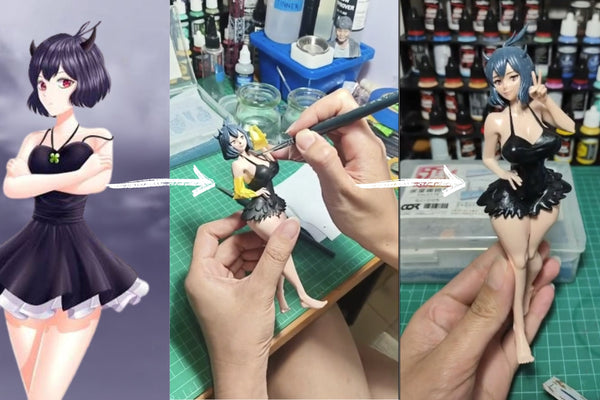
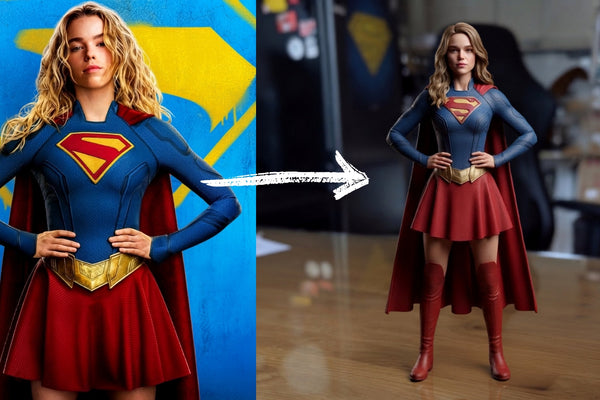
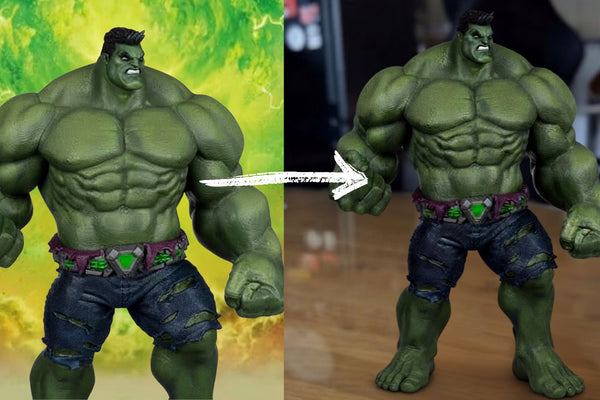
Figuro synthesizes advanced 3d printer action techniques with material science to convert photographic inputs into lifelike figurines. The production pipeline emphasizes the following:
- Pre-print Validation: Digital sculpting and automated checks assure pose feasibility and balance across height variants.
- Optimized Motion Profiles: Z-stage motion and peel sequences are tuned to the selected resin to reduce defects and preserve fine features such as hair strands and facial expression.
- Material Selection: Premium resin is selected for its high detail retention and post-cure stability.
- Quality Assurance: Figuro provides a 100% refund policy if customers do not approve the preview before printing starts, underscoring their commitment to dimensional and aesthetic fidelity.
Such integration of motion control and material selection allows Figuro to offer realistic colored 3D printed figurines, hand-painted finishes, and custom outfits while maintaining reliable throughput and consistent quality.
Quality Control and Post-Processing
Post-processing stages such as support removal, washing, UV curing, and painting interact with initial 3d printer action outcomes. Motion-induced microscopic surface irregularities can be accentuated or mitigated during sanding, priming, and hand painting. For production of collectible figurines, careful process characterization ensures that post-processing enhances perceived quality rather than compensating for avoidable motion artifacts.
Practical Recommendations for Enthusiasts and Operators
For practitioners seeking to refine 3d printer action, the following recommendations are salient:
- Prioritize calibration routines for steps-per-unit and extruder/retraction parameters to ensure dimensional fidelity for miniature-scale features.
- Employ motion tuning tools and frequency analysis to detect resonant modes and adjust acceleration and jerk accordingly.
- When using resin systems, iterate on Z-lift profiles and exposure parameters to minimize peel-induced deformation while preserving detail.
- Document and version control firmware and slicer profiles to maintain reproducibility across production runs.
Conclusion and Call to Action
3d printer action constitutes a multidisciplinary nexus of mechanics, electronics, control theory, and materials engineering. Mastery of kinematic architectures, motion planning, and material-specific dynamics enables the consistent production of high-fidelity figurines. For those seeking a practical application of these principles, Figuro applies rigorous motion control and premium resin materials to transform photographs into tangible keepsakes. To evaluate the results firsthand or to initiate a custom order, visit Figuro and explore the options for realistic colored 3D printed figurines, hand-painted finishes, and custom poses. Start a custom order to experience the calibrated 3d printer action that underpins Figuro's quality guarantee.
Bring Your Best Memories into the 3D World
Tired of looking at your favorite moments through a glass screen? Turn those unforgettable photos into something you can actually touch, hold, and display forever. Whether you're chasing jaw-dropping realism with our Realistic 3D Figurines, adding a fun twist to your desk space with a Custom Bobblehead Figurine, or celebrating a milestone love story with a Personalized Anniversary Couple Gift, we custom-sculpt every single piece to tell your unique story.
👉 Explore Figuro's Full Collection & Start Crafting Yours Today!