


Introduction
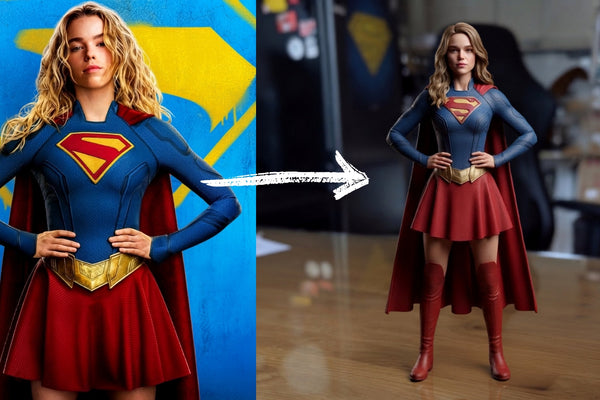
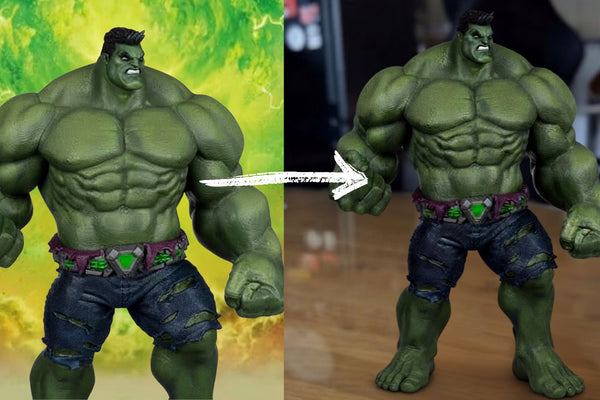
The convergence of 3D printing and game design has introduced new modalities for manufacturing miniatures, bespoke tokens, and prototype components. This article provides a technical overview of 3D printed game assets, with emphasis on material selection, dimensional accuracy, design constraints, and production workflows relevant to hobbyists, professional game designers, and small studios. Where applicable, we reference Figuro as an example of a service that converts high-fidelity digital models into tangible game pieces using premium resin processes.
Why 3D Printing Matters for Games
3D printing enables rapid iteration, small-run manufacturing, and personalization at a level that traditional injection molding cannot economically match. For tabletop and board game ecosystems, 3D printing confers three principal advantages:
- Customization: designers can produce unique sculpts or personalized tokens for players at scale one.
- Prototyping speed: iteration cycles shrink from weeks to days, facilitating playtesting and design validation.
- Complex geometry: features such as undercuts, fine ornamentation, and integrated connectors are feasible without tooling costs.
Materials and Technical Considerations
Resin vs. Filament
For game miniatures, photopolymer resins are the preferred material class due to higher detail resolution and superior surface finish when compared to fused filament fabrication. Resins achieve finer layer heights and capture small sculpted features, which is essential for character likeness, engraved text, and thin appendages.
Premium Resin Attributes
Premium resin formulations, such as those used by specialist providers, exhibit the following attributes relevant to games: high tensile strength, low brittleness for thin parts, and predictable shrinkage factors. These properties support reliable post-processing and painting. When specifying service requirements, request datasheets for tensile modulus, elongation at break, and recommended post-cure parameters to ensure compatibility with intended use.
Design Guidelines for Game Pieces
Wall Thickness and Structural Integrity
Minimum wall thickness must be observed to avoid fragile components. For resin miniatures, a conservative minimum effective thickness is 0.8 mm for unsupported elements and 1.2 mm for load-bearing connectors. Designers should utilize fillets and internal supports in CAD models to distribute stress and minimize fracture risk during handling.
Scale and Proportions
Scale selection depends on the game system. Standard tabletop scales include 28 mm and 32 mm for character bases, though larger display figurines may range from 8 cm to 22 cm in overall height. Figuro provides size options within this range, enabling consistent scale choices for both gameplay and display models.
Articulation and Modularity
For games requiring assembly or interchangeable components, design for tolerances is crucial. Clearance fits between pegs and sockets should account for post-processing material swelling and the precision of the printing process. Typical peg diameters should be increased by 0.2 mm to ensure friction fit after supports are removed and surfaces are cleaned.
Finishing Options and Aesthetic Fidelity
Surface Preparation
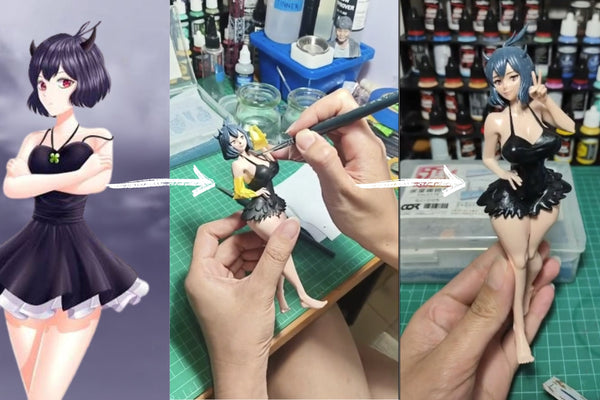
Post-print workflows include support removal, UV curing, and surface sanding or priming. Surface finish significantly impacts subsequent painting quality. Providers offering hand-painted finishes can deliver finished assets that are gameplay-ready, while realistic colored 3D printing options yield accurate base coloration that reduces painting time.
Color and Painting
Choosing between full-color 3D printing and hand painting depends on production volume and desired fidelity. Full-color prints are suitable for tokens and decorative pieces, whereas hand-painted resin delivers a higher-quality aesthetic for character miniatures and collector editions.
Production Workflow and Quality Assurance
Digital-to-Physical Pipeline
An optimized production pipeline begins with validated meshes exported in common formats such as STL or OBJ, followed by orientation and support generation using slicer software. Critical steps include manifold verification, normal orientation checks, and detection of non-manifold edges. Consistent communication between designer and manufacturer about intended tolerances reduces revision cycles.
Proofing and Client Approval
Robust services provide a proofing stage where clients approve a rendered preview or a low-resolution test print. Figuro implements a preview step with a satisfaction guarantee, offering a 100 percent refund if the customer does not approve the preview before printing begins. This policy minimizes financial risk during design iteration.
Applications within Game Development
Prototyping and Playtesting
Rapid production of playable components enables iterative refinement of rules, balancing, and ergonomics. Designers can assess reachability of pieces, tactile feedback, and stacking behavior before finalizing molds or mass-production methods.
Limited Runs and Crowdfunded Rewards
Crowdfunded campaigns frequently require tiered reward fulfillment with varied quantities. 3D printing supports economical limited runs and bespoke add-ons, allowing developers to offer personalized rewards such as named characters, unique poses, or signed display models.
Logistics and Distribution Considerations
When planning production for game releases, factor lead times for post-processing and shipping. Figuro includes free delivery for select regions, including the US, China, Thailand, Singapore, India, and Malaysia, which can streamline logistics for international campaigns. For larger orders, inquire about batch production timelines and carrier options to align with release schedules.
Best Practices for Designers
- Maintain clean topology and avoid unnecessary mesh complexity that increases print time.
- Provide multiple scale variants to accommodate different game systems and player preferences.
- Include assembly guides for multi-part models to reduce user error during kit assembly.
- Document recommended painting and finishing protocols to preserve material longevity.
Conclusion and Call to Action
3D printing has matured into a reliable fabrication method for game miniatures, tokens, and bespoke components. By combining premium resin materials, precise design conventions, and rigorous quality control, designers can produce pieces that satisfy both functional and aesthetic criteria. Figuro offers specialized services that support this workflow, from realistic colored 3D printed outputs to hand-painted finishes and custom poses, with sizes ranging from 8 cm to 22 cm and a clear preview policy that protects the client.
If you are exploring production options for your game, consider evaluating service providers that offer detailed material specifications, iterative proofs, and flexible finishing options. Visit Figuro to review available services or to start a custom order for prototype or limited-run game assets.
Bring Your Best Memories into the 3D World
Tired of looking at your favorite moments through a glass screen? Turn those unforgettable photos into something you can actually touch, hold, and display forever. Whether you're chasing jaw-dropping realism with our Realistic 3D Figurines, adding a fun twist to your desk space with a Custom Bobblehead Figurine, or celebrating a milestone love story with a Personalized Anniversary Couple Gift, we custom-sculpt every single piece to tell your unique story.
👉 Explore Figuro's Full Collection & Start Crafting Yours Today!